Showing posts with label counting Japanese. Show all posts

Jan 16, 2011

Kawaii, Kiree, Utsukushii ?

Minasan konnichiwa!

I received a question from a reader.
Q: What are the differences between: Kawaii, Kiree and Utsukushii ?

All are positive adjectives to show compliment for someone’s appearance especially for women and objects.

Kawaii means cute, and can be used for both toddlers (girl or boy) and good-looking young adults.

Nowadays, kawaii is also used to describe a guy with a baby face. Like you see below:
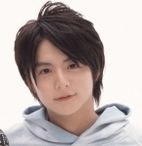
You can call him “ikemen” –abbreviation for Iketeru men. -Iketeru is a slang and means, cool. So Iketeru + men = Ikemen.
(good/cool looking guy) So, this photo, Koike Teppei is known as "Kawaii Ikemen".
(As a matter of fact, I like this type of guys :p)

On the other hand, Kiree is normally meant to depict a woman’s beauty.

However, nowadays there are some Kiree na otoko (beautiful guy) like Gackt.
So he is a "kiree na Ikemen" -beautiful looking guy.



By the way, Kiree can also be used for describing things or cleanliness.

Lastly, Utsukushii has a matured, decent and gorgeous image, like you see in this image:
“berusaiyu no bara” -it's a well-know comic story for girls in Japan.
Oh well, Gackt can be Utsukushii as well.


If you have any question about usage of Japanese language, please ask me :) I'd like to share with everyone in this blog.

Jan 14, 2011

Japanese Language Tips: 3 Common Mistakes amongst Foreigners

Minasan konnichiwa!

As a Japanese teacher myself, I find some common mistakes amongst learners of Japanese due to the culture difference behind the language. So today, I'd like to discuss 3 common mistakes.

Sayoonara :“I won’t see you again!” -– said by a souvenir shop keeper

You probably learnt “goodbye” as Sayoonara in Japanese. Yes, that’s how we (Japanese people) learnt it at school and that’s why your Japanese teacher taught you this way.

However, in the real world (outside school), we rarely use “sayoonara” amongst ourselves. Even when we do, it is used with different meanings in different contexts. Sayoonara is used in farewell or breaking up situations. Especially in the latter case, it means “goodbye forever”. Therefore, if you’re a shop clerk, don’t say “sayoonara” to your customers, but “arigatoo gozaimashita” (Thank you very much). Otherwise, you might end up in losing your regulars!

Watashi no nihongo wa warui desu :“My Japanese is vicious” – said by a student


A common tendency is to simply translate our native language. In this case, the student probably wanted to say “My Japanese is bad”. Yes, warui means bad, but in a moralistic way. Therefore, in the situation “He has a fault” or “She is wrong”, we can say “kare/kanojo ga warui desu”. However, your Japanese cannot be moralistically bad! If you want to say “My Japanese is bad/not good”, you need to say it another way, like “I’m not good at Japanese”. So in Japanese, say “Watashi wa nihongo ga heta desu”. (I hope you won’t have to say that though!)

Anata mo genki desu ka? :“Hey stranger, are you fine too?” – said by a close friend


Even some Japanese teachers teach “you” as “anata”. However, the usage of “anata” is different from that of “you” in English. We hardly ever call our friends “anata”, except jokingly. We use the person’s name. (For example, Kazue mo genki? Or Tanaka-san mo 0-genki desu ka?) Japanese love to be called by name; we feel a bit sad when we’re called “anata”, because we each have our unique name.

Hope it's all clear. :) but don't worry making mistakes! By making mistakes, I can notice and correct them.
I made a lot of mistakes in English too :P (and still... maybe forever!?)

I'll update once I find some more. Jaa mata ne!

Jan 13, 2011

七夕: The Story of Tanabata

7月7日、今日は七夕です。kyoo wa tanabata desu!
July 7th is the day of the Tanabata Festival.


I remember that I had lots of fun in Tanabata festivals in elementary school. We wrote our wishes on strips of paper called tanzaku, which we tied to bamboo branches.

Actually, Tanabata is based on a Chinese legend about a princess and a cowherd who fell in love. They are symbolized by the stars Altair and Vega that only cross paths once a year – on July 7th!

Some people say Tanabata is a mixture of ancient Japanese and Chinese legends. ‘Tanabata’ means ‘cloth of the loom’ and has nothing to do with the letters 七夕 (Qi Xi in Chinese, Chilseok in Korean), which mean ‘Night of the Sevens’.

We even have a Tanabata song in Japan:)


Sasanoha sarasara

Nokiba ni yureru

Ohoshisama kirakira

Kin gin sunago

Bamboo leaves rustle

Quivering at the eaves

Stars glitter

Gold and silver sands

Goshiki no tanzaku

Watashi ga kaita

Ohoshisama kirakira

Sora kara miteru

Strips of paper with five colors

I wrote them

Stars glitter

Look down from the above


Let's look up the sky and enjoy the Tanabata night! :)

Dec 10, 2010

chotto...

Minasan Konnichiwa!

Ogenki desu ka?

Kyoo wa totemo suzushii desu!

It’s very cooling here now.

Today, I’d like to talk about a phrase “chotto”

If you learnt Japanese before, you might heard a phrase “chotto...”

So what is chotto means?

Its literal meaning is “a little” but chotto can be used in different way too.

1. To get attention:

e.g. chotto!  Excuse me!, Lesten! (very informal, used when angry)

*sumimasen and chotto are commonly used together.

e.g. sumimasen, chotto iidesu ka?  -Excuse me, attention please!.

2. Hesitation

e.g. chotto sumimasen.  Sorry to disturb you..

3. Little

e.g. miruku o chotto irete kudasai.  Please add a little milk.

e.g. sumimasen, ima chotto iidesu ka?  Excuse me, do you have a minute now?

4. Very (negative)

e.g. Uu-n chotto muzukashii desu ne.  hmmm.. it sounds a bit difficult.

(Actually it could be “very difficult” and they often say “chotto muzukashii” with very difficult facial expression.

5. No.

e.g. A: eega o mimasen ka?  Would you like to watch movie?

B: Sumimasen, chotto…  Sorry, no.

To avoid saying exact meaning, there are varieties of expressions in Japanese.

Such as gurai(about), goro(about, around), hodo(about), tabun(maybe), etc. In addition, they like to say in a roundabout sort of way, like “Probably it seems that they say ..” if it’s literally translated into English.

They use vague expressions often because they don’t want to lose the other party’s face, as well as they try to avoid unnecessary argument especially when they have to say something negative.

Is it confusing? or interesting? It’s a culture.

You can learn such subtle cultural and linguistic differences in my Conversational Video Course!

Ja, mata ne.

-Kazue

Dec 8, 2010

elevator girl


Why don’t Japanese look me in the eyes?

In Japanese society, looking at someone directly is sometimes considered as showing strong hostility, especially towards to your seniors (However, it matters what you want to communicate e.g. a questioning look, a puzzled look, a disagreeing look. Sometimes we need to look directly at somebody to convey these). This can be traced back to the strict class system during Edo period (1600-1867)

For a job interview, we are advised to look around the tie area of the interviewer. Of course, we should look at the interviewer’s eyes sometimes, but not for too long.

Have you noticed that elevator girl?  (a girl who presses the floor buttons for you at high-class department stores, such as Mitsukoshi) They normally wear a wide-brimmed hat so that they can avoid direct eye contact with customers.

Anyhow Japanese are generally shy and not used to looking at the opponents’ eyes directly for long time. So please don’t worry even if they seem not to be looking at you. They are still listening to you!

Nov 21, 2010

Counting numbers 2 ~Conv. L5~

Minasan konnichiwa!
So you’ve learnt counting no. 1-10.
Next is 11-100.
Don’t worry, it’s quite easy.
After 10 (jyuu),
11: jyuu-ichi
12: jyuu-ni
13: jyuu-san
14: jyuu-yon ….
So, basically just repeating 1-9 after “jyuu”.
How about 20, 30, 40…
20: ni-jyuu
30: san-jyuu
40: yon-jyuu….
Easy right?
Well then how about 33?
san-jyuu san.
71?
nana-jyuu ichi.
Wow! so systematic. :)
100?
Hyaku.
101?
Hyaku ichi.
Yasashii desu ne! (easy, isn’t it?)
Jaa mata!
-Kazue
Let's learn Japanese online! --> http://learnjapanese123.com 

Nov 19, 2010

Ohayoo! -Conv L3- counting numbers

Minasan, ohayoo gozaimasu!
Ogenki desu ka?
I said “ohayoo!” this is casual greeting in the morning to friends.
When you greet to your senior, please say “ohayoo gozaimasu” :)
Dewa, kyoo no lesson desu.
counting no. 0-10
0:  zero or rei
  1. ichi
  2. ni
  3. san
  4. yon / shi
  5. go
  6. roku
  7. nana / shichi
  8. hachi
  9. kyuu / ku
  10. jyuu
muzukashii? (difficult?)
yasashii? (easy?)
jaa mata ashita!
-Kazue
Check this out! -> http://learnjapanese123.com