Showing posts with label Japanese greetings. Show all posts

Jan 16, 2011

Kawaii, Kiree, Utsukushii ?

Minasan konnichiwa!

I received a question from a reader.
Q: What are the differences between: Kawaii, Kiree and Utsukushii ?

All are positive adjectives to show compliment for someone’s appearance especially for women and objects.

Kawaii means cute, and can be used for both toddlers (girl or boy) and good-looking young adults.

Nowadays, kawaii is also used to describe a guy with a baby face. Like you see below:
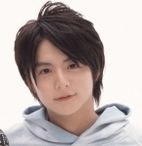
You can call him “ikemen” –abbreviation for Iketeru men. -Iketeru is a slang and means, cool. So Iketeru + men = Ikemen.
(good/cool looking guy) So, this photo, Koike Teppei is known as "Kawaii Ikemen".
(As a matter of fact, I like this type of guys :p)

On the other hand, Kiree is normally meant to depict a woman’s beauty.

However, nowadays there are some Kiree na otoko (beautiful guy) like Gackt.
So he is a "kiree na Ikemen" -beautiful looking guy.



By the way, Kiree can also be used for describing things or cleanliness.

Lastly, Utsukushii has a matured, decent and gorgeous image, like you see in this image:
“berusaiyu no bara” -it's a well-know comic story for girls in Japan.
Oh well, Gackt can be Utsukushii as well.


If you have any question about usage of Japanese language, please ask me :) I'd like to share with everyone in this blog.

Jan 15, 2011

Chikan ni Chuui! -Japanese Signboards(3)

Mina-san, konnichiwa!

This is the latest in my series about Japanese signboards. Until now we’ve looked at giant moving crabs and manga cafés… Fun things.

But some signboards are about really serious things. (Though they still make me laugh!) Have a look at this one. I found it on a station platform.


The larger letters down the right say Chikan ni Chui, which means

“WATCH OUT FOR PERVERTS!”

The word in red is chikan, which means a guy who gropes at women in trains. It has been a social problem since long time ago in Japan.

These guys cause a lot of problems on trains and create misery for women traveling to work. The fact that the trains are packed makes it easier for the chikan and harder to know which guy did it…How to watch them out then !?

Therefore, we have trains with “Ladies Only” carriages during rush hours (女性専用車両 -> http://learnjapanese123.com/blog/?p=145 as a way of beating the problem.

The rest of the message reads Fushinsha wo mitara 110-ban – “Dial 110 (police) if you see anyone suspicious”.

We girls have got to stand up to chikan. It’s dirty and insulting. Chikan ni chuui!

–Kazue

Jan 13, 2011

七夕: The Story of Tanabata

7月7日、今日は七夕です。kyoo wa tanabata desu!
July 7th is the day of the Tanabata Festival.


I remember that I had lots of fun in Tanabata festivals in elementary school. We wrote our wishes on strips of paper called tanzaku, which we tied to bamboo branches.

Actually, Tanabata is based on a Chinese legend about a princess and a cowherd who fell in love. They are symbolized by the stars Altair and Vega that only cross paths once a year – on July 7th!

Some people say Tanabata is a mixture of ancient Japanese and Chinese legends. ‘Tanabata’ means ‘cloth of the loom’ and has nothing to do with the letters 七夕 (Qi Xi in Chinese, Chilseok in Korean), which mean ‘Night of the Sevens’.

We even have a Tanabata song in Japan:)


Sasanoha sarasara

Nokiba ni yureru

Ohoshisama kirakira

Kin gin sunago

Bamboo leaves rustle

Quivering at the eaves

Stars glitter

Gold and silver sands

Goshiki no tanzaku

Watashi ga kaita

Ohoshisama kirakira

Sora kara miteru

Strips of paper with five colors

I wrote them

Stars glitter

Look down from the above


Let's look up the sky and enjoy the Tanabata night! :)

Jan 10, 2011

なっとう Nattō

Minasan konnichiwa!

I’m going to talk about Japanese food today.
Not all that stuff everyone loves – tempura, sushi, raamen, gyōza, (yum!) – but the food foreigners (and some Japanese) just can’t get used to!
Let’s start with this:

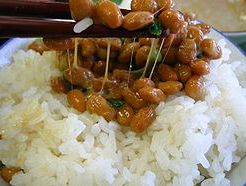
Nattō - one of my favorite Japanese food :)


Oh no! Some people are already turning away in disgust! But wait – nattō is really delicious when you get used to it! Really – hontō da yo!

Nattō is just fermented soybeans. The fermenting process creates this sticky slime that holds the whole thing together and gets everywhere! Just the sight of that puts most foreigners off!

But once you’ve tried it a few times (and got used to the smell – oh, I forgot to mention that!) you might just get hooked.

Best way of eating? Just try it on a bowl of rice, as in the picture. Wave your chopsticks about to catch the strands of slime, and you’ll soon be saying Gochisō-sama! (Thanks for the meal!) Or even O-kawari arimasu ka? (Can I have some more?)

More strange Japanese foods coming soon.


Jaa mata ne!

–Kazue

Dec 19, 2010

How to socialize with Japanese? -first time meeting-

Minasan Ohisashiburi desu. (long time no see, everyone)

Ogenki desu ka?

I’m sorry for not being updated for a while.

I conducted a seminar this week and I had been busy for preparing for it... (iiwake desu ne.. -am I excusing? hehe sorry..)

Today I’d like to introduce you one Japanese business tip from the seminar, about do and don’t while socializing with Japanese.

First step:

Here are the things you can talk about in the first time meeting. –Just general topics.

Onamae wa? What’s your name?

Oshigoto wa? What’s your job?

Osumai wa? Where do you live?

gokazoku wa? How’s your family?

goshusshin wa? Where are you from?

Building a good relationship with Japanese in business

Generally, it takes longer time to build a good relationship with Japanese compared to that in other countries. There are some topics you want to avoid in the first time meeting. Such as..

gokekkon wa? (Are you married?)

Okosan wa? (Do you have any children?)

Otoshi wa? (= oikutsu desu ka? / nan-sai desu ka? – How old are you?)

If you ask such questions, normally Japanese will give you a wry smile.

Actually it depends, as younger generations tend to be more open and casual, but the chances are still high. If you want to ask such questions, you may want to become a volunteer yourself first, such as marital status -but not in the first meeting- and wait until they open up to you.

hehe, is it "mendokusai?" -bothersome?

Smile and get used to it :)


Have a great friendship with Japanese!

Jaa mata ne!

Kazue

Dec 10, 2010

chotto...

Minasan Konnichiwa!

Ogenki desu ka?

Kyoo wa totemo suzushii desu!

It’s very cooling here now.

Today, I’d like to talk about a phrase “chotto”

If you learnt Japanese before, you might heard a phrase “chotto...”

So what is chotto means?

Its literal meaning is “a little” but chotto can be used in different way too.

1. To get attention:

e.g. chotto!  Excuse me!, Lesten! (very informal, used when angry)

*sumimasen and chotto are commonly used together.

e.g. sumimasen, chotto iidesu ka?  -Excuse me, attention please!.

2. Hesitation

e.g. chotto sumimasen.  Sorry to disturb you..

3. Little

e.g. miruku o chotto irete kudasai.  Please add a little milk.

e.g. sumimasen, ima chotto iidesu ka?  Excuse me, do you have a minute now?

4. Very (negative)

e.g. Uu-n chotto muzukashii desu ne.  hmmm.. it sounds a bit difficult.

(Actually it could be “very difficult” and they often say “chotto muzukashii” with very difficult facial expression.

5. No.

e.g. A: eega o mimasen ka?  Would you like to watch movie?

B: Sumimasen, chotto…  Sorry, no.

To avoid saying exact meaning, there are varieties of expressions in Japanese.

Such as gurai(about), goro(about, around), hodo(about), tabun(maybe), etc. In addition, they like to say in a roundabout sort of way, like “Probably it seems that they say ..” if it’s literally translated into English.

They use vague expressions often because they don’t want to lose the other party’s face, as well as they try to avoid unnecessary argument especially when they have to say something negative.

Is it confusing? or interesting? It’s a culture.

You can learn such subtle cultural and linguistic differences in my Conversational Video Course!

Ja, mata ne.

-Kazue

Nov 26, 2010

Asking telephone numbers ~Conv. L6~

Minasan konbanwa! (now 1am here..)

Today's lesson is very useful, guys!

Asking telephone number. :)

"denwa bangoo wa nan-ban desu ka?"

denwa = telephone

bangoo = number

nan-ban = what number

so, the literal translation is

What number is your telephone number?

sounds funny? But that's how we ask. :)

81-6453-3900 desu.

"hachi ichi no roku yon go san no san kyuu zero zero desu."

so we say the number one by one.

and "-" connecting between country code or regional code, say "no"

Yasashii desho? (easy isn't it?)

Dewa, minasan no denwa bangoo wa nan ban desu ka?

For counting number and telephone number, you can learn from my
Free Japanese lesson: http://learnjapanese123.com

Jaa mata!

-Kazue