Showing posts with label Japanese lesson. Show all posts
Showing posts with label Japanese lesson. Show all posts
Mar 29, 2012
iPhoneで日本語を学ぼう! Learn Japanese with iPhone
日本語学習アプリのプロモーションビデオを作りました。宜しくお


Jan 16, 2011
Kawaii, Kiree, Utsukushii ?
Minasan konnichiwa!
I received a question from a reader.
Q: What are the differences between: Kawaii, Kiree and Utsukushii ?
All are positive adjectives to show compliment for someone’s appearance especially for women and objects.
Kawaii means cute, and can be used for both toddlers (girl or boy) and good-looking young adults.

Nowadays, kawaii is also used to describe a guy with a baby face. Like you see below:

You can call him “ikemen” –abbreviation for Iketeru men. -Iketeru is a slang and means, cool. So Iketeru + men = Ikemen.
(good/cool looking guy) So, this photo, Koike Teppei is known as "Kawaii Ikemen".
(As a matter of fact, I like this type of guys :p)
On the other hand, Kiree is normally meant to depict a woman’s beauty.
However, nowadays there are some Kiree na otoko (beautiful guy) like Gackt.
So he is a "kiree na Ikemen" -beautiful looking guy.

By the way, Kiree can also be used for describing things or cleanliness.
Lastly, Utsukushii has a matured, decent and gorgeous image, like you see in this image:
“berusaiyu no bara” -it's a well-know comic story for girls in Japan.
Oh well, Gackt can be Utsukushii as well.

If you have any question about usage of Japanese language, please ask me :) I'd like to share with everyone in this blog.
I received a question from a reader.
Q: What are the differences between: Kawaii, Kiree and Utsukushii ?
All are positive adjectives to show compliment for someone’s appearance especially for women and objects.
Kawaii means cute, and can be used for both toddlers (girl or boy) and good-looking young adults.

Nowadays, kawaii is also used to describe a guy with a baby face. Like you see below:
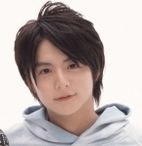
You can call him “ikemen” –abbreviation for Iketeru men. -Iketeru is a slang and means, cool. So Iketeru + men = Ikemen.
(good/cool looking guy) So, this photo, Koike Teppei is known as "Kawaii Ikemen".
(As a matter of fact, I like this type of guys :p)
On the other hand, Kiree is normally meant to depict a woman’s beauty.
However, nowadays there are some Kiree na otoko (beautiful guy) like Gackt.
So he is a "kiree na Ikemen" -beautiful looking guy.

By the way, Kiree can also be used for describing things or cleanliness.
Lastly, Utsukushii has a matured, decent and gorgeous image, like you see in this image:
“berusaiyu no bara” -it's a well-know comic story for girls in Japan.
Oh well, Gackt can be Utsukushii as well.
If you have any question about usage of Japanese language, please ask me :) I'd like to share with everyone in this blog.
Jan 15, 2011
Chikan ni Chuui! -Japanese Signboards(3)
Mina-san, konnichiwa!
This is the latest in my series about Japanese signboards. Until now we’ve looked at giant moving crabs and manga cafés… Fun things.
But some signboards are about really serious things. (Though they still make me laugh!) Have a look at this one. I found it on a station platform.

The larger letters down the right say Chikan ni Chui, which means
“WATCH OUT FOR PERVERTS!””
The word in red is chikan, which means a guy who gropes at women in trains. It has been a social problem since long time ago in Japan.
These guys cause a lot of problems on trains and create misery for women traveling to work. The fact that the trains are packed makes it easier for the chikan and harder to know which guy did it…How to watch them out then !?
Therefore, we have trains with “Ladies Only” carriages during rush hours (女性専用車両 -> http://learnjapanese123.com/blog/?p=145 as a way of beating the problem.
The rest of the message reads Fushinsha wo mitara 110-ban – “Dial 110 (police) if you see anyone suspicious”.
We girls have got to stand up to chikan. It’s dirty and insulting. Chikan ni chuui!
–Kazue
This is the latest in my series about Japanese signboards. Until now we’ve looked at giant moving crabs and manga cafés… Fun things.
But some signboards are about really serious things. (Though they still make me laugh!) Have a look at this one. I found it on a station platform.

The larger letters down the right say Chikan ni Chui, which means
“WATCH OUT FOR PERVERTS!””
The word in red is chikan, which means a guy who gropes at women in trains. It has been a social problem since long time ago in Japan.
These guys cause a lot of problems on trains and create misery for women traveling to work. The fact that the trains are packed makes it easier for the chikan and harder to know which guy did it…How to watch them out then !?
Therefore, we have trains with “Ladies Only” carriages during rush hours (女性専用車両 -> http://learnjapanese123.com/blog/?p=145 as a way of beating the problem.
The rest of the message reads Fushinsha wo mitara 110-ban – “Dial 110 (police) if you see anyone suspicious”.
We girls have got to stand up to chikan. It’s dirty and insulting. Chikan ni chuui!
–Kazue
Jan 13, 2011
七夕: The Story of Tanabata
7月7日、今日は七夕です。kyoo wa tanabata desu!
July 7th is the day of the Tanabata Festival.
I remember that I had lots of fun in Tanabata festivals in elementary school. We wrote our wishes on strips of paper called tanzaku, which we tied to bamboo branches.
Actually, Tanabata is based on a Chinese legend about a princess and a cowherd who fell in love. They are symbolized by the stars Altair and Vega that only cross paths once a year – on July 7th!
Some people say Tanabata is a mixture of ancient Japanese and Chinese legends. ‘Tanabata’ means ‘cloth of the loom’ and has nothing to do with the letters 七夕 (Qi Xi in Chinese, Chilseok in Korean), which mean ‘Night of the Sevens’.
We even have a Tanabata song in Japan:)
Sasanoha sarasara
Nokiba ni yureru
Ohoshisama kirakira
Kin gin sunago
Bamboo leaves rustle
Quivering at the eaves
Stars glitter
Gold and silver sands
Goshiki no tanzakuWatashi ga kaita
Ohoshisama kirakira
Sora kara miteru
Strips of paper with five colors
I wrote them
Stars glitter
Look down from the above
Let's look up the sky and enjoy the Tanabata night! :)
Dec 26, 2010
Are you herbivorous or carnivorous? ~Trendy Japanese~
Minasan konnichiwa!
I want to tell you about ‘trendy Japanese’. That doesn’t mean fashions or music! I’m talking about language.
We Japanese love making up new words or phrases that are trendy for a while, but quickly go out of fashion. They’re usually quite funny too.
Here are some to start with.
草食系男子
Sōshoku-kei danshi – men who are not aggressive towards career, love or sex. Tend to be modern, neat and posh guys
肉食系男子
Nikushoku-kei danshi – who are opposite to "Sōshoku-kei danshi"; some people may say it's a traditional Japanese men..(!?)
Actually, sōshoku-kei danshi literally means “herbivorous male”! And yes, nikushoku-kei danshi means “carnivorous male”. But it’s nothing to do with their eating habits. It’s more their attitude to life.
“Herbivorous men” are more attractive to girls in Japan today. It’s because they’re less demanding; the modern Japanese woman wants to be free to live her life as she pleases.
And now, there’s a new word for these women too:
肉食女子
Nikushoku joshi – carnivorous females! Run for cover, guys!
Nowadays, Japanese women are much more proactive in their love lives as well as their careers. They seem to be inspired by media images like the four women in “Sex and the City”.
And there’s another type of “carnivorous female”:
Here are related articles in Japanese.
http://www.j-cast.com/2009/01/02032952.html
http://opi-rina.chunichi.co.jp/topic/20100519-1.html
Seems like it’s lonely being a meat-eater in Japan!
Ah, Yakiniku tabetai! (I wanna eat Yakiniku!)
More trendy words coming soon.
Jaa ne!
–Kazue
I want to tell you about ‘trendy Japanese’. That doesn’t mean fashions or music! I’m talking about language.
We Japanese love making up new words or phrases that are trendy for a while, but quickly go out of fashion. They’re usually quite funny too.
Here are some to start with.
草食系男子
Sōshoku-kei danshi – men who are not aggressive towards career, love or sex. Tend to be modern, neat and posh guys
肉食系男子
Nikushoku-kei danshi – who are opposite to "Sōshoku-kei danshi"; some people may say it's a traditional Japanese men..(!?)
Actually, sōshoku-kei danshi literally means “herbivorous male”! And yes, nikushoku-kei danshi means “carnivorous male”. But it’s nothing to do with their eating habits. It’s more their attitude to life.
“Herbivorous men” are more attractive to girls in Japan today. It’s because they’re less demanding; the modern Japanese woman wants to be free to live her life as she pleases.
And now, there’s a new word for these women too:
肉食女子
Nikushoku joshi – carnivorous females! Run for cover, guys!
Nowadays, Japanese women are much more proactive in their love lives as well as their careers. They seem to be inspired by media images like the four women in “Sex and the City”.
And there’s another type of “carnivorous female”:
ホルモン女子
Horumon joshi – “yakiniku girl” (horumon (=hormone/ organ meat) is another word for yakiniku)

Here are related articles in Japanese.
http://www.j-cast.com/2009/01/02032952.html
http://opi-rina.chunichi.co.jp/topic/20100519-1.html
Seems like it’s lonely being a meat-eater in Japan!
Ah, Yakiniku tabetai! (I wanna eat Yakiniku!)
More trendy words coming soon.
Jaa ne!
–Kazue
Dec 25, 2010
Minasan konnichiwa!
I just love old Japanese proverbs. Some of them are so funny! So I’m going to introduce the best ones here.
Here’s one of my favorites:
サルも木から落ちる

Monkeys aren’t supposed to fall out of trees. They’re supposed to know what they’re doing! But you know – even monkeys fall out of trees?
Got it? It’s what people say when someone has made a mistake they’re not expected to make.
In English, people say “Well… No one’s perfect” Or “We all make mistakes.” But I prefer that mental image of a monkey falling out of a tree. What would the other monkeys say to make it feel better?
Here’s another one that means almost the same thing:
弘法にも筆の誤り
Kōbō nimo fude no ayamari
“Even (the famous calligrapher) Kobo (Taishi) made mistakes with the brush”
It’s not so funny, is it?
If you look these up in a dictionary, you might find this one in English:
“Even Homer sometimes nods”
But I don’t think you would ever say this – would you??
I’d rather think of that monkey falling out of its tree.
More funny Japanese proverbs coming soon!
Jaa mata ne
–Kazue
I just love old Japanese proverbs. Some of them are so funny! So I’m going to introduce the best ones here.
Here’s one of my favorites:
サルも木から落ちる
Saru-mo ki-kara ochiru
“Even monkeys fall out of trees!”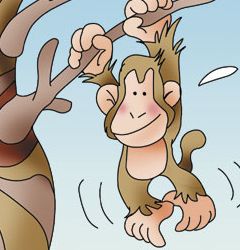
Monkeys aren’t supposed to fall out of trees. They’re supposed to know what they’re doing! But you know – even monkeys fall out of trees?
Got it? It’s what people say when someone has made a mistake they’re not expected to make.
In English, people say “Well… No one’s perfect” Or “We all make mistakes.” But I prefer that mental image of a monkey falling out of a tree. What would the other monkeys say to make it feel better?
Here’s another one that means almost the same thing:
弘法にも筆の誤り
Kōbō nimo fude no ayamari
“Even (the famous calligrapher) Kobo (Taishi) made mistakes with the brush”
It’s not so funny, is it?
If you look these up in a dictionary, you might find this one in English:
“Even Homer sometimes nods”
But I don’t think you would ever say this – would you??
I’d rather think of that monkey falling out of its tree.
More funny Japanese proverbs coming soon!
Jaa mata ne
–Kazue
Dec 23, 2010
Scenery in my hometown
Minasan konnichiwa!
Ogenki desu ka?
Watashi wa ima nihon no jikka ni imasu.
Now I'm in Japan, in my home town (Saitama).
The weather here is perfect past three days, nice, crisp, no clouds.
Totemo ii tenki de, kimochi ga iidesu.
It's been very nice weather and feel good.
Atsu sugizu, samu sugizu.
Not too hot or too cold.
Kono shashin wa uchi no kinjo desu.
This photo is taken in my neighborhood.

Tanbo - rice paddy.
My home town is a residential area and about 1hrs away from Tokyo by train.
Totemo shizuka desu. Very quiet.
Kyoo wa chotto kinjo o sanpo shimashita.
I took a walk in my neighborhood.
I just saw this signboard along the way.
Can you guess what shop is this?

Hehehe, if you cannot guess, please learn Japanese Katakana!
http://learnjapanese123.com/HiraganaKatakana
You can download pdf sample textbook and practice Japanese from the above link too.
Kotae wa tsugi no blog post de!
I'll show you the answer in the next blog post :)
Mata ne!
Kazue
Ogenki desu ka?
Watashi wa ima nihon no jikka ni imasu.
Now I'm in Japan, in my home town (Saitama).
The weather here is perfect past three days, nice, crisp, no clouds.
Totemo ii tenki de, kimochi ga iidesu.
It's been very nice weather and feel good.
Atsu sugizu, samu sugizu.
Not too hot or too cold.
Kono shashin wa uchi no kinjo desu.
This photo is taken in my neighborhood.
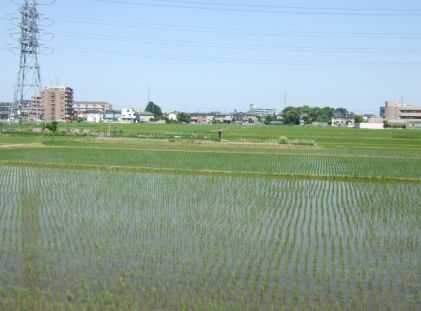
Tanbo - rice paddy.
My home town is a residential area and about 1hrs away from Tokyo by train.
Totemo shizuka desu. Very quiet.
Kyoo wa chotto kinjo o sanpo shimashita.
I took a walk in my neighborhood.
I just saw this signboard along the way.
Can you guess what shop is this?

Hehehe, if you cannot guess, please learn Japanese Katakana!
http://learnjapanese123.com/HiraganaKatakana
You can download pdf sample textbook and practice Japanese from the above link too.
Kotae wa tsugi no blog post de!
I'll show you the answer in the next blog post :)
Mata ne!
Kazue
Dec 12, 2010
Conversational Japanese Video Course Launched!
Minasan Konnichiwa!
So please don't miss out this opportunity!

Let's find them out!
Yoroshiku onegai shimasu!
-Kazue
Today, I have a very special announcement.
The Conversational Japanese Video Course is just launched!
Please check this out!
Now it comes with 2 irresistible bonuses!So please don't miss out this opportunity!
You might probably wonder...
"So What about the course?"
"So What about the course?"
"What are the irresistable bonuses?"
Let's find them out!
-Kazue
Dec 9, 2010
Let's learn ひらがな(Hiragana) & カタカナ(Katakana)!
みなさん、こんにちは!
Minasan konnichiwa!
Do you know what is Hiragana (ひらがな) and Katakana (かたかな)?
Both are the original Japanese letters for reading and writing.
Japanese learn these letters in their primary schools.
If you walk in Japanese streets, you'll see these letters everywhere.
And it's vital to learn these Hiragana and Katakana when you visit Japan because most of the sign boards are written in Japanese!
Today I would like to inform you my new product:
Complete Hiragana & Katakana Workbooks with Video Tutorials
If you are keen to learn Japanese reading and writing, Please click the above link!
You might say, "Why do I have to buy it from you?"
The reason is, the free websites Hiragana lessons you see on internet have a lot of mistakes and none of them are not complete or effective.
I don't want you to waster your precious time.
That's why I spent 100s of hours to create this material.
If you learn from this Complete Hiragana & Katakana Workbooks with step-by-step Video tutorials, you'll get a clear idea and will begin to read and write Japanese with confidence in a week.
Here is a demo video:

I hope you like it.
Let's take a short cut in learning ひらがな Hiragana and カタカナ Katakana!
Learn more detail on:
http://learnjapanese123.com/HiraganaKatakana
- かずえ
Minasan konnichiwa!
Do you know what is Hiragana (ひらがな) and Katakana (かたかな)?
Both are the original Japanese letters for reading and writing.
Japanese learn these letters in their primary schools.
If you walk in Japanese streets, you'll see these letters everywhere.
And it's vital to learn these Hiragana and Katakana when you visit Japan because most of the sign boards are written in Japanese!
Today I would like to inform you my new product:
Complete Hiragana & Katakana Workbooks with Video Tutorials
If you are keen to learn Japanese reading and writing, Please click the above link!
You might say, "Why do I have to buy it from you?"
The reason is, the free websites Hiragana lessons you see on internet have a lot of mistakes and none of them are not complete or effective.
I don't want you to waster your precious time.
That's why I spent 100s of hours to create this material.
If you learn from this Complete Hiragana & Katakana Workbooks with step-by-step Video tutorials, you'll get a clear idea and will begin to read and write Japanese with confidence in a week.
Here is a demo video:
I hope you like it.
Let's take a short cut in learning ひらがな Hiragana and カタカナ Katakana!
Learn more detail on:
http://learnjapanese123.com/HiraganaKatakana
- かずえ
Dec 7, 2010
doozo oagari kudasai
どうぞお上がりください。: doozo oagari kudasai.
literal translation is "please go up".
What is that mean?
It's "Please come in"
(This phrase is for your guests at home, not at office.)
Why is that?
Because of...
 the structure of genkan (entrance space) of a house. This genkan space is for taking off your shoes.
As you see, inside of the house is one step higher than the area connected to outside.
This genkan space is very useful for changing shoes to slippers (you can sit and change if necessary.) Also, you can keep the house clean). In case of rain, you can open or close your umbrella inside the house so that you won't get wet.
After taking off your shoes, you have to turn your shoes back so that you can put it on smoothly when you go out (as well as it looks better).
You can learn this kind of Japanese culture in my conversational Japanese Course. http://learnjapanese123.com/conversation
Dewa mata!
-Kazue
literal translation is "please go up".
What is that mean?
It's "Please come in"
(This phrase is for your guests at home, not at office.)
Why is that?
Because of...
 the structure of genkan (entrance space) of a house. This genkan space is for taking off your shoes.
As you see, inside of the house is one step higher than the area connected to outside.
This genkan space is very useful for changing shoes to slippers (you can sit and change if necessary.) Also, you can keep the house clean). In case of rain, you can open or close your umbrella inside the house so that you won't get wet.
After taking off your shoes, you have to turn your shoes back so that you can put it on smoothly when you go out (as well as it looks better).
You can learn this kind of Japanese culture in my conversational Japanese Course. http://learnjapanese123.com/conversation
Dewa mata!
-Kazue
Dec 5, 2010
oikura desu ka?
What if you are at a shop and cannot find a price tag, what to do?
Yes, you need to ask the price. How?
Sumimasen, ikura desu ka? or more decently,
Sumimasen, oikura desu ka?
What is this "o" in front of "ikura"?
This "o" is a prefix showing politeness. It just sounds nicer.
This "o" can attach to most of Japanese words, but not all of them.
Examples:
kane -> okane money
heya -> oheya room
sushi -> osushi sushi
miyage -> omiyage souvenir
denwa -> odenwa telephone
Also, you cannot attach "o" to foreign words.
Thus, we don't say "okonpyuutaa"(computer) or "otakushii" (taxi)
Some words start with "o", but it doesn't mean polite or not.
e.g. ohayoo (good morning). However, "hayoo" doesn't make sense.
dewa mata!
-Kazue
http://learnjapanese123.com
Yes, you need to ask the price. How?
Sumimasen, ikura desu ka? or more decently,
Sumimasen, oikura desu ka?
What is this "o" in front of "ikura"?
This "o" is a prefix showing politeness. It just sounds nicer.
This "o" can attach to most of Japanese words, but not all of them.
Examples:
kane -> okane money
heya -> oheya room
sushi -> osushi sushi
miyage -> omiyage souvenir
denwa -> odenwa telephone
Also, you cannot attach "o" to foreign words.
Thus, we don't say "okonpyuutaa"(computer) or "otakushii" (taxi)
Some words start with "o", but it doesn't mean polite or not.
e.g. ohayoo (good morning). However, "hayoo" doesn't make sense.
dewa mata!
-Kazue
http://learnjapanese123.com
Nov 26, 2010
Asking telephone numbers ~Conv. L6~
Minasan konbanwa! (now 1am here..)
Today's lesson is very useful, guys!
Asking telephone number. :)
"denwa bangoo wa nan-ban desu ka?"
denwa = telephone
bangoo = number
nan-ban = what number
so, the literal translation is
What number is your telephone number?
sounds funny? But that's how we ask. :)
81-6453-3900 desu.
"hachi ichi no roku yon go san no san kyuu zero zero desu."
so we say the number one by one.
and "-" connecting between country code or regional code, say "no"
Yasashii desho? (easy isn't it?)
Dewa, minasan no denwa bangoo wa nan ban desu ka?
For counting number and telephone number, you can learn from my
Free Japanese lesson: http://learnjapanese123.com
Jaa mata!
-Kazue
Today's lesson is very useful, guys!
Asking telephone number. :)
"denwa bangoo wa nan-ban desu ka?"
denwa = telephone
bangoo = number
nan-ban = what number
so, the literal translation is
What number is your telephone number?
sounds funny? But that's how we ask. :)
81-6453-3900 desu.
"hachi ichi no roku yon go san no san kyuu zero zero desu."
so we say the number one by one.
and "-" connecting between country code or regional code, say "no"
Yasashii desho? (easy isn't it?)
Dewa, minasan no denwa bangoo wa nan ban desu ka?
For counting number and telephone number, you can learn from my
Free Japanese lesson: http://learnjapanese123.com
Jaa mata!
-Kazue
Oct 27, 2010
Asking telephone numbers ~Conv. L6~
Minasan konbanwa! (now 1am here..)
Today's lesson is very useful, guys!
Asking telephone number. :)
"denwa bangoo wa nan-ban desu ka?"
denwa = telephone
bangoo = number
nan-ban = what number
so, the literal translation is
What number is your telephone number?
sounds funny? But that's how we ask. :)
81-6453-3900 desu.
"hachi ichi no roku yon go san no san kyuu zero zero desu."
so we say the number one by one.
and "-" connecting between country code or regional code, say "no"
Yasashii desho? (easy isn't it?)
Dewa, minasan no denwa bangoo wa nan ban desu ka?
For counting number and telephone number, you can learn from my
Free Japanese lesson: http://learnjapanese123.com
Jaa mata!
-Kazue
Today's lesson is very useful, guys!
Asking telephone number. :)
"denwa bangoo wa nan-ban desu ka?"
denwa = telephone
bangoo = number
nan-ban = what number
so, the literal translation is
What number is your telephone number?
sounds funny? But that's how we ask. :)
81-6453-3900 desu.
"hachi ichi no roku yon go san no san kyuu zero zero desu."
so we say the number one by one.
and "-" connecting between country code or regional code, say "no"
Yasashii desho? (easy isn't it?)
Dewa, minasan no denwa bangoo wa nan ban desu ka?
For counting number and telephone number, you can learn from my
Free Japanese lesson: http://learnjapanese123.com
Jaa mata!
-Kazue
Subscribe to:
Posts (Atom)