Showing posts with label Japanese for beginners. Show all posts

Jan 13, 2011

七夕: The Story of Tanabata

7月7日、今日は七夕です。kyoo wa tanabata desu!
July 7th is the day of the Tanabata Festival.


I remember that I had lots of fun in Tanabata festivals in elementary school. We wrote our wishes on strips of paper called tanzaku, which we tied to bamboo branches.

Actually, Tanabata is based on a Chinese legend about a princess and a cowherd who fell in love. They are symbolized by the stars Altair and Vega that only cross paths once a year – on July 7th!

Some people say Tanabata is a mixture of ancient Japanese and Chinese legends. ‘Tanabata’ means ‘cloth of the loom’ and has nothing to do with the letters 七夕 (Qi Xi in Chinese, Chilseok in Korean), which mean ‘Night of the Sevens’.

We even have a Tanabata song in Japan:)


Sasanoha sarasara

Nokiba ni yureru

Ohoshisama kirakira

Kin gin sunago

Bamboo leaves rustle

Quivering at the eaves

Stars glitter

Gold and silver sands

Goshiki no tanzaku

Watashi ga kaita

Ohoshisama kirakira

Sora kara miteru

Strips of paper with five colors

I wrote them

Stars glitter

Look down from the above


Let's look up the sky and enjoy the Tanabata night! :)

Jan 11, 2011

Japanese Language Tips: “ごろ:goro”

Minasan Konnichiwa!


This week’s ‘Japanese language tip’ is about goro – meaning “about”!

Have you noticed Japanese people being deliberately vague? They think it’s more polite to express themselves vaguely rather than clearly and directly. Here’s a good example when talking about the time.

A: Nan-ji goro ikimasu ka?

B: Hachi-ji goro ikimasu.

---

A: What time will you go?

B: At 8 o’clock.

Hachi-ji goro actually means “About eight o’clock”, but don’t be deceived! People use goro even when they mean the exact time. And if you’ve been invited to a friend’s house at hachi-ji goro – don’t be late! In Japan, you’re usually expected to turn up on time.

–Of course, that doesn’t apply to boys meeting their girlfriends for a date…boys cannot be late and should arrive even earlier (my opinion, hahaha).

And please note if it’s a business meeting, you’re expected to turn up five to ten minutes early!!
So ki o tsukete! (be careful!)


Mata ne!

–Kazue

Jan 10, 2011

なっとう Nattō

Minasan konnichiwa!

I’m going to talk about Japanese food today.
Not all that stuff everyone loves – tempura, sushi, raamen, gyōza, (yum!) – but the food foreigners (and some Japanese) just can’t get used to!
Let’s start with this:

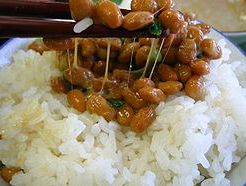
Nattō - one of my favorite Japanese food :)


Oh no! Some people are already turning away in disgust! But wait – nattō is really delicious when you get used to it! Really – hontō da yo!

Nattō is just fermented soybeans. The fermenting process creates this sticky slime that holds the whole thing together and gets everywhere! Just the sight of that puts most foreigners off!

But once you’ve tried it a few times (and got used to the smell – oh, I forgot to mention that!) you might just get hooked.

Best way of eating? Just try it on a bowl of rice, as in the picture. Wave your chopsticks about to catch the strands of slime, and you’ll soon be saying Gochisō-sama! (Thanks for the meal!) Or even O-kawari arimasu ka? (Can I have some more?)

More strange Japanese foods coming soon.


Jaa mata ne!

–Kazue

Dec 23, 2010

Scenery in my hometown

Minasan konnichiwa!

Ogenki desu ka?
Watashi wa ima nihon no jikka ni imasu.
Now I'm in Japan, in my home town (Saitama).

The weather here is perfect past three days, nice, crisp, no clouds.
Totemo ii tenki de, kimochi ga iidesu.
It's been very nice weather and feel good.

Atsu sugizu, samu sugizu.
Not too hot or too cold.

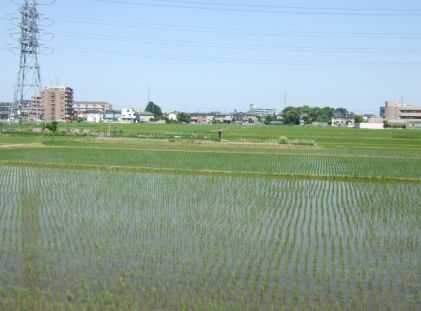
Kono shashin wa uchi no kinjo desu.
This photo is taken in my neighborhood.


Tanbo - rice paddy.

My home town is a residential area and about 1hrs away from Tokyo by train.

Totemo shizuka desu. Very quiet.

Kyoo wa chotto kinjo o sanpo shimashita.

I took a walk in my neighborhood.

I just saw this signboard along the way.

Can you guess what shop is this?


Hehehe, if you cannot guess, please  learn Japanese Katakana!

http://learnjapanese123.com/HiraganaKatakana

You can download pdf sample textbook and practice Japanese from the above link too.

Kotae wa tsugi no blog post de!
I'll show you the answer in the next blog post :)

Mata ne!

Kazue

Dec 22, 2010

Japanese Language Tips: “ね:ne”

Minasan konnichiwa!


Have you heard Japanese people saying “ne?” at the end of a sentence – even when they’re speaking English?

Here are some examples:

––This is your tax form, ne?

––You understand, ne?


Crazy! But what’s it for?

You’ll see from this conversation:

A: Sumimasen, B-san no denwa bangō wa nan-ban desu ka?

B: 738-2910 desu.

A: 738-2910 desu ne?

B: Hai, sō desu.

---

A: Excuse me, B, what’s your telephone number?

B: It’s 738-2910.

A: 738-2910?

B: Yes, that’s right.

So here, “ne” is used to confirm that you heard something correctly, especially when you’re certain you’ve got it right.

Ne” is also used to express a shared feeling or emotion, or to seek a person’s agreement.

A: Ii tenki desu ne.

B: Sō desu ne.

---

A: It’s nice weather, isn’t it?

B: Yes, it is. (indeed).

ne” is quite close to English “isn’t it”, or “yes?”, or “OK?” at the end of a sentence.

Actually, if you listen carefully, you’ll even hear me saying it on my Japanese video course!   http://learnjapanese123.com/conversation You'll find a sample video there.

In fact, you’ll hear it everywhere you go in Japan. One little word to express all those things – Benri desu ne! (Convenient, isn’t it!)

Dewa, mata ne! (See you again – OK!)

–Kazue

Dec 12, 2010

Conversational Japanese Video Course Launched!

Minasan Konnichiwa!
Today, I have a very special announcement.
The Conversational Japanese Video Course is just launched!

Please check this out!
Now it comes with 2 irresistible bonuses!
So please don't miss out this opportunity!


You might probably wonder...
"So What about the course?"
"What are the irresistable bonuses?"

Let's find them out!

Yoroshiku onegai shimasu!

-Kazue

Dec 10, 2010

chotto...

Minasan Konnichiwa!

Ogenki desu ka?

Kyoo wa totemo suzushii desu!

It’s very cooling here now.

Today, I’d like to talk about a phrase “chotto”

If you learnt Japanese before, you might heard a phrase “chotto...”

So what is chotto means?

Its literal meaning is “a little” but chotto can be used in different way too.

1. To get attention:

e.g. chotto!  Excuse me!, Lesten! (very informal, used when angry)

*sumimasen and chotto are commonly used together.

e.g. sumimasen, chotto iidesu ka?  -Excuse me, attention please!.

2. Hesitation

e.g. chotto sumimasen.  Sorry to disturb you..

3. Little

e.g. miruku o chotto irete kudasai.  Please add a little milk.

e.g. sumimasen, ima chotto iidesu ka?  Excuse me, do you have a minute now?

4. Very (negative)

e.g. Uu-n chotto muzukashii desu ne.  hmmm.. it sounds a bit difficult.

(Actually it could be “very difficult” and they often say “chotto muzukashii” with very difficult facial expression.

5. No.

e.g. A: eega o mimasen ka?  Would you like to watch movie?

B: Sumimasen, chotto…  Sorry, no.

To avoid saying exact meaning, there are varieties of expressions in Japanese.

Such as gurai(about), goro(about, around), hodo(about), tabun(maybe), etc. In addition, they like to say in a roundabout sort of way, like “Probably it seems that they say ..” if it’s literally translated into English.

They use vague expressions often because they don’t want to lose the other party’s face, as well as they try to avoid unnecessary argument especially when they have to say something negative.

Is it confusing? or interesting? It’s a culture.

You can learn such subtle cultural and linguistic differences in my Conversational Video Course!

Ja, mata ne.

-Kazue

Dec 9, 2010

Let's learn ひらがな(Hiragana) & カタカナ(Katakana)!

みなさん、こんにちは!
Minasan konnichiwa!

Do you know what is Hiragana (ひらがな) and Katakana (かたかな)?
Both are the original Japanese letters for reading and writing.
Japanese learn these letters in their primary schools.
If you walk in Japanese streets, you'll see these letters everywhere.

And it's vital to learn these Hiragana and Katakana when you visit Japan because most of the sign boards are written in Japanese!

Today I would like to inform you my new product:

Complete Hiragana & Katakana Workbooks with Video Tutorials

If you are keen to learn Japanese reading and writing, Please click the above link!

You might say, "Why do I have to buy it from you?"

The reason is, the free websites Hiragana lessons you see on internet have a lot of mistakes and  none of them are not complete or effective.

I don't want you to waster your precious time.
That's why I spent 100s of hours to create this material.

If you learn from this Complete Hiragana & Katakana Workbooks with step-by-step Video tutorials, you'll get a clear idea and will begin to read and write Japanese with confidence in a week.

Here is a demo video:


I hope you like it.
Let's take a short cut in learning ひらがな Hiragana and カタカナ Katakana!
Learn more detail on:
http://learnjapanese123.com/HiraganaKatakana

- かずえ

Dec 8, 2010

elevator girl


Why don’t Japanese look me in the eyes?

In Japanese society, looking at someone directly is sometimes considered as showing strong hostility, especially towards to your seniors (However, it matters what you want to communicate e.g. a questioning look, a puzzled look, a disagreeing look. Sometimes we need to look directly at somebody to convey these). This can be traced back to the strict class system during Edo period (1600-1867)

For a job interview, we are advised to look around the tie area of the interviewer. Of course, we should look at the interviewer’s eyes sometimes, but not for too long.

Have you noticed that elevator girl?  (a girl who presses the floor buttons for you at high-class department stores, such as Mitsukoshi) They normally wear a wide-brimmed hat so that they can avoid direct eye contact with customers.

Anyhow Japanese are generally shy and not used to looking at the opponents’ eyes directly for long time. So please don’t worry even if they seem not to be looking at you. They are still listening to you!

Dec 7, 2010

doozo oagari kudasai

どうぞお上がりください。: doozo oagari kudasai.
literal translation is "please go up".

What is that mean?

It's "Please come in"

(This phrase is for your guests at home, not  at office.)

Why is that?
Because of...

the structure of genkan (entrance space) of a house. This genkan space is for taking off your shoes.
As you see, inside of the house is one step higher than the area connected to outside.

This genkan space is very useful for changing shoes to slippers (you can sit and change if necessary.)  Also, you can keep the house clean). In case of rain, you can open or close your umbrella inside the house so that you won't get wet.

After taking off your shoes, you have to turn your shoes back so that you can put it on smoothly when you go out (as well as it looks better).

You can learn this kind of Japanese culture in my conversational Japanese Course.  http://learnjapanese123.com/conversation

Dewa mata!
-Kazue

Nov 18, 2010

Ogenki desu ka? ~Conv. L2~

Minasan konnichiwa!
Kyoo wa L2 desu. (Today is Lesson2)
Greeting part 2
  1. Ogenki desu ka? (How are you?)
  2. Hai, genki desu. (Yes, I’m fine. Reply from above question)
  3. ~ san wa? (how about you, Mr/Ms ~ . Please call them using their name)
  4. Dewa mata (see you again”)
  5. Jaa mata (see you again (casual))
Additional New Vocab
  1. Hai (Yes)
  2. Iie (No)
  3. kyoo (today)
Jaa mata!!
-Kazue
Probably the best way to learn Japanese! -> http://learnjapanese123.com