Showing posts with label Learn Japanese online. Show all posts

Mar 23, 2012

宝くじ / Takara-kuji / Lottery

宝くじ/Takara-kuji/ Lottery -みなさん夢を買います。/Minasan yume o kaimasu./People buy dreams.  当たったことがありますか?/Atatta koto ga arimasu ka?/ Have you ever won lottery?

Here is the best way to learn Japanese: http://learnjapanese123.com/conversation
Thank you very much for viewing my blog page :)
-Kazue

Jan 16, 2011

Kawaii, Kiree, Utsukushii ?

Minasan konnichiwa!

I received a question from a reader.
Q: What are the differences between: Kawaii, Kiree and Utsukushii ?

All are positive adjectives to show compliment for someone’s appearance especially for women and objects.

Kawaii means cute, and can be used for both toddlers (girl or boy) and good-looking young adults.

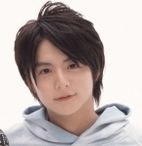
Nowadays, kawaii is also used to describe a guy with a baby face. Like you see below:

You can call him “ikemen” –abbreviation for Iketeru men. -Iketeru is a slang and means, cool. So Iketeru + men = Ikemen.
(good/cool looking guy) So, this photo, Koike Teppei is known as "Kawaii Ikemen".
(As a matter of fact, I like this type of guys :p)

On the other hand, Kiree is normally meant to depict a woman’s beauty.

However, nowadays there are some Kiree na otoko (beautiful guy) like Gackt.
So he is a "kiree na Ikemen" -beautiful looking guy.


By the way, Kiree can also be used for describing things or cleanliness.

Lastly, Utsukushii has a matured, decent and gorgeous image, like you see in this image:
“berusaiyu no bara” -it's a well-know comic story for girls in Japan.
Oh well, Gackt can be Utsukushii as well.


If you have any question about usage of Japanese language, please ask me :) I'd like to share with everyone in this blog.

Jan 10, 2011

なっとう Nattō

Minasan konnichiwa!

I’m going to talk about Japanese food today.
Not all that stuff everyone loves – tempura, sushi, raamen, gyōza, (yum!) – but the food foreigners (and some Japanese) just can’t get used to!
Let’s start with this:

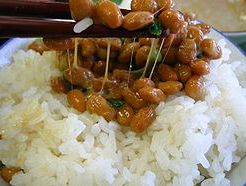
Nattō - one of my favorite Japanese food :)


Oh no! Some people are already turning away in disgust! But wait – nattō is really delicious when you get used to it! Really – hontō da yo!

Nattō is just fermented soybeans. The fermenting process creates this sticky slime that holds the whole thing together and gets everywhere! Just the sight of that puts most foreigners off!

But once you’ve tried it a few times (and got used to the smell – oh, I forgot to mention that!) you might just get hooked.

Best way of eating? Just try it on a bowl of rice, as in the picture. Wave your chopsticks about to catch the strands of slime, and you’ll soon be saying Gochisō-sama! (Thanks for the meal!) Or even O-kawari arimasu ka? (Can I have some more?)

More strange Japanese foods coming soon.


Jaa mata ne!

–Kazue

Dec 12, 2010

Conversational Japanese Video Course Launched!

Minasan Konnichiwa!
Today, I have a very special announcement.
The Conversational Japanese Video Course is just launched!

Please check this out!
Now it comes with 2 irresistible bonuses!
So please don't miss out this opportunity!


You might probably wonder...
"So What about the course?"
"What are the irresistable bonuses?"

Let's find them out!

Yoroshiku onegai shimasu!

-Kazue

Dec 3, 2010

Shrine for love

There are more than 81,000 shrines in Japan.
What a surprise!  During new year days, Japanese people visit shrine(s) for a prayer.
About Jinja (Shinto Shrine ->http://en.wikipedia.org/wiki/Shinto_shrine

Each shrine has its own specialty(ies). Shrines  for business, promotion, study, family safe, fertility, easy labor, health, wealth, ample harvest, traffic safety, ridding of bad luck, etc.
If you have any particular wishes, you go to its specialized shrine.

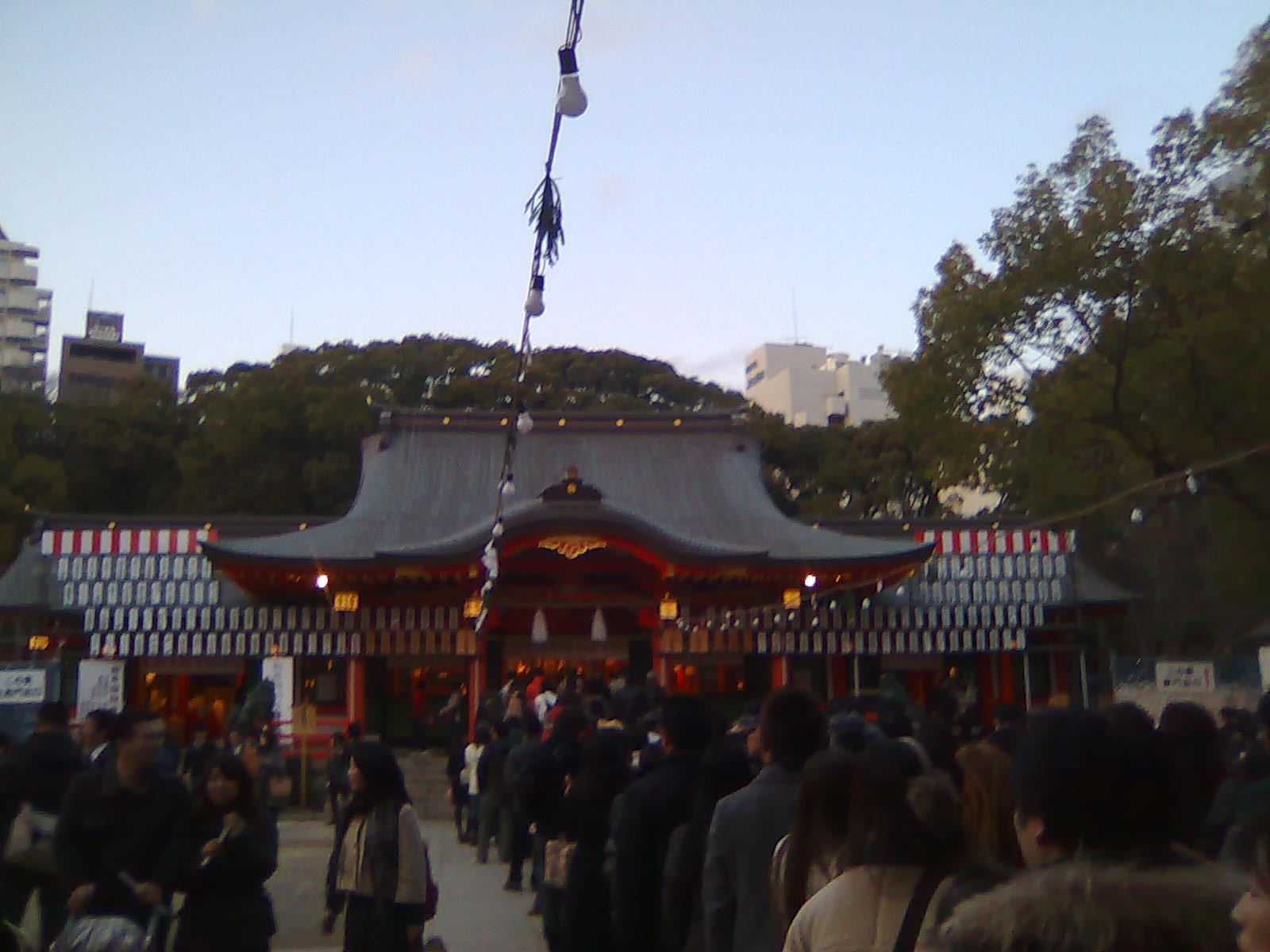
The photo below is a famous Jinja, Ikuta jinja, in Kobe. This shrine is for love (romance). Oh! so many people were queuing up. I missed a chance to offer a prayer with a vow. haha.
By the way, Japanese like to wear dark and monotonous color outfit.. including me.. I just noticed.


One of the fun parts of visiting shrine is food!
There are many food stalls along the roadside.

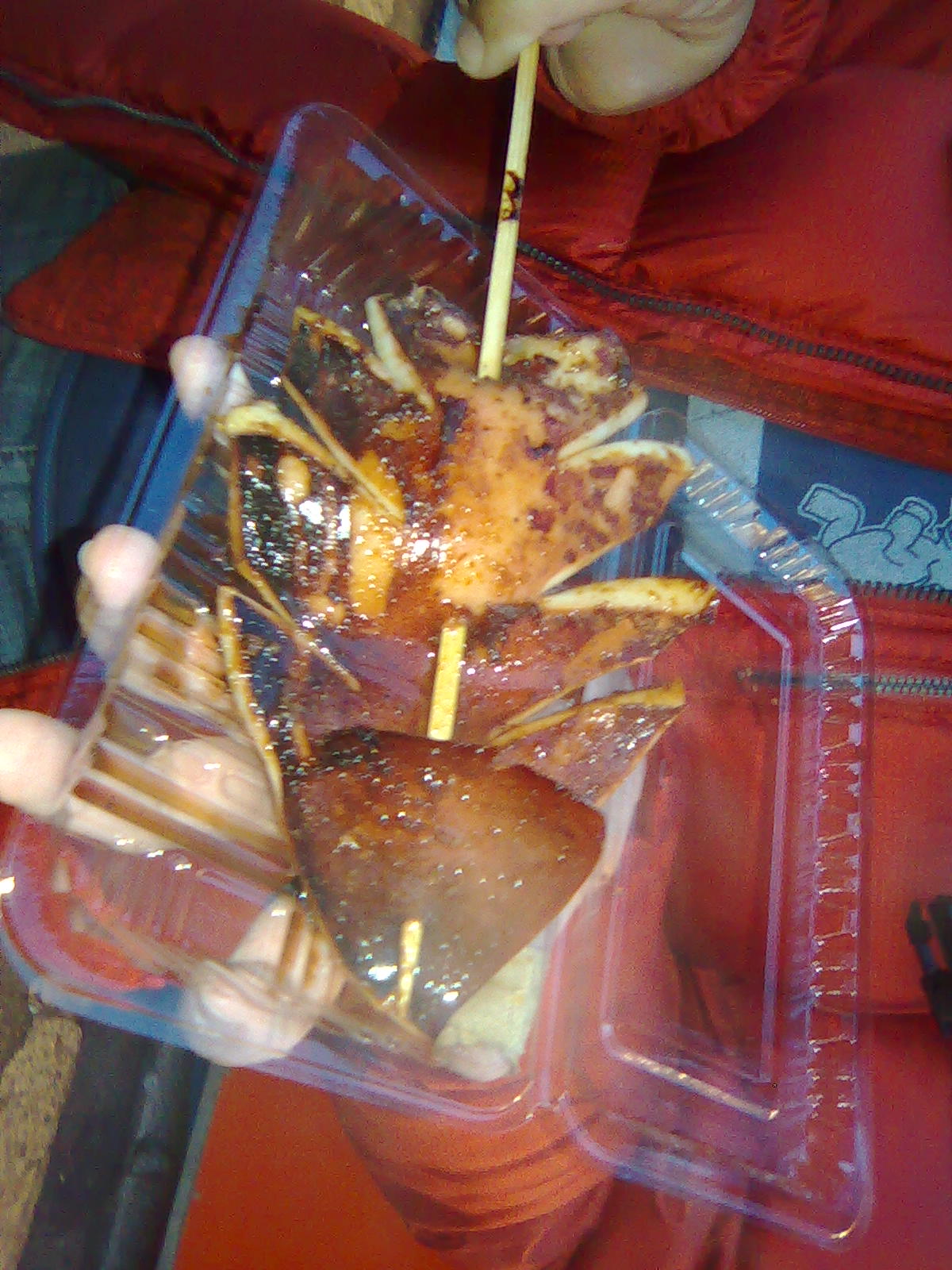
My friends got a grilled squid.
- Yaki ika-.  It was delicious. Oishi katta!

-Kazue

Dec 1, 2010

How to say "What time is good for you?"

Vocabs:
itsu : when
ii : good
itsu ga ii ? : when is good for you?
nan ji : what time

nanji ga ii? : what time is good for you?
- ji wa doo? : how about -- o'clock?
sanji wa doo? : how about 3 o'clock?

You can learn casual Japanese like above from
http://learnjapanese123.com/conversation

Hope you like it :)

Nov 30, 2010

ima, nanji desu ka? ~Conv. L7~

Konnichiwa!

If you forget a watch, you can always ask someone,

" Sumimasen, ima nan-ji desu ka? "
-Excuse me, what time is it now? -


ima : now
nan-ji: what time

You just add "ji" after numbers 1-12 for o'clock.

1:00  ichi-ji
2:00 ni-ji  , etc.

Pls remember, 4, 7, 9 o'clock is

yo-ji,  shichi-ji, and ku-ji.

gozen: am
gogo: pm    and we say this gozen or gogo before the time.

Thus, 4pm is gogo yoji.   9am is gozen kuji.

Yasashii desu ne. :)

Nov 29, 2010

Japanese Keitai etiquette

We call it "manner mode" for silent mode on Keitai -mobile phone- in Japanese.

Japanese are very conscious about if we are not disturbing other people. Thus, in the train, we're not supposed to talk on mobile phone. This is also due to a medical purpose that the electronic wave from mobile phone might affect a heart pacer.

Since we cannot talk on the phone in the train, writing keitai-mail (email) is very popular. It's different from sms as they don't use tel. no.  I noticed 5 out of 6 seated passengers in front of me were writing something on their keitai. We are so obsessed with kaitai..

-Kazue
Learn Japanese Effectively -> http://learnjapanese123.com

Nov 26, 2010

Asking telephone numbers ~Conv. L6~

Minasan konbanwa! (now 1am here..)

Today's lesson is very useful, guys!

Asking telephone number. :)

"denwa bangoo wa nan-ban desu ka?"

denwa = telephone

bangoo = number

nan-ban = what number

so, the literal translation is

What number is your telephone number?

sounds funny? But that's how we ask. :)

81-6453-3900 desu.

"hachi ichi no roku yon go san no san kyuu zero zero desu."

so we say the number one by one.

and "-" connecting between country code or regional code, say "no"

Yasashii desho? (easy isn't it?)

Dewa, minasan no denwa bangoo wa nan ban desu ka?

For counting number and telephone number, you can learn from my
Free Japanese lesson: http://learnjapanese123.com

Jaa mata!

-Kazue