Now you can learn Japanese with iPhone! iPhone application to learn Japanese language!
Japanese is the mother tongue of Japan. In Japan it is known as Nihongo. If you are going to Japan and want to learn Japanese very quickly, then it is very right place to learn Japanese. In Japan people believe in giving respect. There are different levels of Japanese language that are used according to the social level of the people. Japanese grammar is easy to learn although it’s quite different from that of English. For example, English sentence structure is [Subject + Verb + Object] in general, whereas Japanese is [(Subject)* + Object + Verb] *subject is often omitted in Japanese. Traveler’s Japanese’s easy lessons will make your learning Japanese experiences very interesting. It will make you understand the sentences and it helps you in making your own sentences.
The aim of this app is to help you to understand the basics of Japanese language that, when you visit Japan, it will be helpful for you in every step. This is very useful app specially designed for the travelers, though this app you can learn Japanese for non-travelers as well, definitely fast and logically. The experienced Japanese teachers designed this course. In this Traveler’s Japanese App, there are over 75 minute audio lessons, which will be very helpful for you to practice. You will be provided by the complete list of all phrases (in both rōma-ji ~alphabet~ as a guide for pronunciation, and Hiragana/Katakana & Kanji ~for written Japanese) and grammar and explains each and every part of it. The syllabus is very briefly described which include all the essential part of the Japanese language. This covers most of the day-to-day situation that a traveler faces. You can easily improve your Japanese skill, just listening to the audio, which is recorded in the voice of the local Japanese person and. Internet connection is not required while accessing this app. It is not boring, here you will learn in a very playful manner. Purchase it or Just download it free, and you can access this app as when you want. Some of its contents are, how you make reservation, how you talk in taxi, hotel, station, restaurant or public places and when you go out or visit someone’s house, how to pronounce days, weeks, months and many more. You can easily cope up with these situations by using Traveler’s Japanese app, and you can see your progress through phrase and word quizzes in this app.
Showing posts with label learn Japanese culture. Show all posts
Mar 7, 2012
Jan 16, 2011
Kawaii, Kiree, Utsukushii ?
Minasan konnichiwa!
I received a question from a reader.
Q: What are the differences between: Kawaii, Kiree and Utsukushii ?
All are positive adjectives to show compliment for someone’s appearance especially for women and objects.
Kawaii means cute, and can be used for both toddlers (girl or boy) and good-looking young adults.

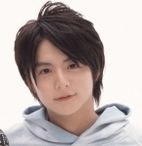
Nowadays, kawaii is also used to describe a guy with a baby face. Like you see below:

You can call him “ikemen” –abbreviation for Iketeru men. -Iketeru is a slang and means, cool. So Iketeru + men = Ikemen.
(good/cool looking guy) So, this photo, Koike Teppei is known as "Kawaii Ikemen".
(As a matter of fact, I like this type of guys :p)
On the other hand, Kiree is normally meant to depict a woman’s beauty.
However, nowadays there are some Kiree na otoko (beautiful guy) like Gackt.
So he is a "kiree na Ikemen" -beautiful looking guy.

By the way, Kiree can also be used for describing things or cleanliness.
Lastly, Utsukushii has a matured, decent and gorgeous image, like you see in this image:
“berusaiyu no bara” -it's a well-know comic story for girls in Japan.
Oh well, Gackt can be Utsukushii as well.

If you have any question about usage of Japanese language, please ask me :) I'd like to share with everyone in this blog.
I received a question from a reader.
Q: What are the differences between: Kawaii, Kiree and Utsukushii ?
All are positive adjectives to show compliment for someone’s appearance especially for women and objects.
Kawaii means cute, and can be used for both toddlers (girl or boy) and good-looking young adults.
Nowadays, kawaii is also used to describe a guy with a baby face. Like you see below:
You can call him “ikemen” –abbreviation for Iketeru men. -Iketeru is a slang and means, cool. So Iketeru + men = Ikemen.
(good/cool looking guy) So, this photo, Koike Teppei is known as "Kawaii Ikemen".
(As a matter of fact, I like this type of guys :p)
On the other hand, Kiree is normally meant to depict a woman’s beauty.
However, nowadays there are some Kiree na otoko (beautiful guy) like Gackt.
So he is a "kiree na Ikemen" -beautiful looking guy.
By the way, Kiree can also be used for describing things or cleanliness.
Lastly, Utsukushii has a matured, decent and gorgeous image, like you see in this image:
“berusaiyu no bara” -it's a well-know comic story for girls in Japan.
Oh well, Gackt can be Utsukushii as well.
If you have any question about usage of Japanese language, please ask me :) I'd like to share with everyone in this blog.
Jan 10, 2011
なっとう Nattō
Minasan konnichiwa!
I’m going to talk about Japanese food today.
Not all that stuff everyone loves – tempura, sushi, raamen, gyōza, (yum!) – but the food foreigners (and some Japanese) just can’t get used to!
Let’s start with this:
Nattō - one of my favorite Japanese food :)

Oh no! Some people are already turning away in disgust! But wait – nattō is really delicious when you get used to it! Really – hontō da yo!
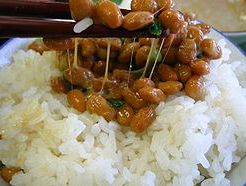
Nattō is just fermented soybeans. The fermenting process creates this sticky slime that holds the whole thing together and gets everywhere! Just the sight of that puts most foreigners off!
But once you’ve tried it a few times (and got used to the smell – oh, I forgot to mention that!) you might just get hooked.
Best way of eating? Just try it on a bowl of rice, as in the picture. Wave your chopsticks about to catch the strands of slime, and you’ll soon be saying Gochisō-sama! (Thanks for the meal!) Or even O-kawari arimasu ka? (Can I have some more?)
More strange Japanese foods coming soon.
Jaa mata ne!
–Kazue
I’m going to talk about Japanese food today.
Not all that stuff everyone loves – tempura, sushi, raamen, gyōza, (yum!) – but the food foreigners (and some Japanese) just can’t get used to!
Let’s start with this:
Nattō - one of my favorite Japanese food :)
Oh no! Some people are already turning away in disgust! But wait – nattō is really delicious when you get used to it! Really – hontō da yo!
Nattō is just fermented soybeans. The fermenting process creates this sticky slime that holds the whole thing together and gets everywhere! Just the sight of that puts most foreigners off!
But once you’ve tried it a few times (and got used to the smell – oh, I forgot to mention that!) you might just get hooked.
Best way of eating? Just try it on a bowl of rice, as in the picture. Wave your chopsticks about to catch the strands of slime, and you’ll soon be saying Gochisō-sama! (Thanks for the meal!) Or even O-kawari arimasu ka? (Can I have some more?)
More strange Japanese foods coming soon.
Jaa mata ne!
–Kazue
Dec 25, 2010
Minasan konnichiwa!
I just love old Japanese proverbs. Some of them are so funny! So I’m going to introduce the best ones here.
Here’s one of my favorites:
サルも木から落ちる

Monkeys aren’t supposed to fall out of trees. They’re supposed to know what they’re doing! But you know – even monkeys fall out of trees?
Got it? It’s what people say when someone has made a mistake they’re not expected to make.
In English, people say “Well… No one’s perfect” Or “We all make mistakes.” But I prefer that mental image of a monkey falling out of a tree. What would the other monkeys say to make it feel better?
Here’s another one that means almost the same thing:
弘法にも筆の誤り
Kōbō nimo fude no ayamari
“Even (the famous calligrapher) Kobo (Taishi) made mistakes with the brush”
It’s not so funny, is it?
If you look these up in a dictionary, you might find this one in English:
“Even Homer sometimes nods”
But I don’t think you would ever say this – would you??
I’d rather think of that monkey falling out of its tree.
More funny Japanese proverbs coming soon!
Jaa mata ne
–Kazue
I just love old Japanese proverbs. Some of them are so funny! So I’m going to introduce the best ones here.
Here’s one of my favorites:
サルも木から落ちる
Saru-mo ki-kara ochiru
“Even monkeys fall out of trees!”Monkeys aren’t supposed to fall out of trees. They’re supposed to know what they’re doing! But you know – even monkeys fall out of trees?
Got it? It’s what people say when someone has made a mistake they’re not expected to make.
In English, people say “Well… No one’s perfect” Or “We all make mistakes.” But I prefer that mental image of a monkey falling out of a tree. What would the other monkeys say to make it feel better?
Here’s another one that means almost the same thing:
弘法にも筆の誤り
Kōbō nimo fude no ayamari
“Even (the famous calligrapher) Kobo (Taishi) made mistakes with the brush”
It’s not so funny, is it?
If you look these up in a dictionary, you might find this one in English:
“Even Homer sometimes nods”
But I don’t think you would ever say this – would you??
I’d rather think of that monkey falling out of its tree.
More funny Japanese proverbs coming soon!
Jaa mata ne
–Kazue
Dec 24, 2010
Japanese Signboards
Minasan konnichiwa!
Japanese signboards are fascinating and attract a lot of photographers from overseas. The best ones are huge, three-dimensional signs that look more like characters in a manga.
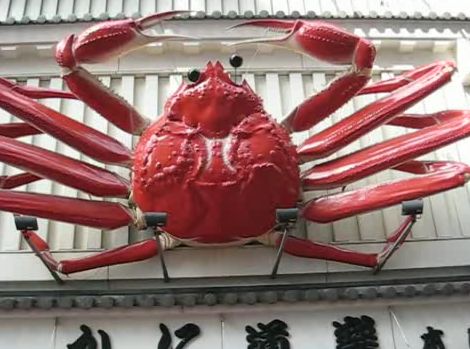
This is probably the most famous one of all. It’s a sign for a restaurant called Kani Dōraku in Dōtonbori, Osaka. Can you guess what the restaurant sells…?

…YES! It’s a crab restaurant! The sign is six meters across, and would you believe, the legs on the crab actually move! It was built in 1960 and is still moving!!
I’m fascinated by Japanese signboards as well. When they’re cute, I just have to stop and kiss them.

Want to know who I’m kissing here?
The answer is “kaaru ojisan”
(Ojisan means, middle aged man)
Kawaii ne?
Cute, isn’t it?
Actually, I was not kissing him, I was trying to get the snack from him...
Jaa mata ne!
P.S. The answer of the last post is "koin landorii": coin laundry (=laundromat).
:)
–Kazue
Japanese signboards are fascinating and attract a lot of photographers from overseas. The best ones are huge, three-dimensional signs that look more like characters in a manga.
This is probably the most famous one of all. It’s a sign for a restaurant called Kani Dōraku in Dōtonbori, Osaka. Can you guess what the restaurant sells…?
…YES! It’s a crab restaurant! The sign is six meters across, and would you believe, the legs on the crab actually move! It was built in 1960 and is still moving!!
I’m fascinated by Japanese signboards as well. When they’re cute, I just have to stop and kiss them.
Want to know who I’m kissing here?
The answer is “kaaru ojisan”
(Ojisan means, middle aged man)
Kawaii ne?
Cute, isn’t it?
Actually, I was not kissing him, I was trying to get the snack from him...
Jaa mata ne!
P.S. The answer of the last post is "koin landorii": coin laundry (=laundromat).
:)
–Kazue
Dec 19, 2010
How to socialize with Japanese? -first time meeting-
Minasan Ohisashiburi desu. (long time no see, everyone)
Ogenki desu ka?
I’m sorry for not being updated for a while.
I conducted a seminar this week and I had been busy for preparing for it... (iiwake desu ne.. -am I excusing? hehe sorry..)
Today I’d like to introduce you one Japanese business tip from the seminar, about do and don’t while socializing with Japanese.
First step:
Here are the things you can talk about in the first time meeting. –Just general topics.
Onamae wa? What’s your name?
Oshigoto wa? What’s your job?
Osumai wa? Where do you live?
gokazoku wa? How’s your family?
goshusshin wa? Where are you from?
Building a good relationship with Japanese in business
Generally, it takes longer time to build a good relationship with Japanese compared to that in other countries. There are some topics you want to avoid in the first time meeting. Such as..
gokekkon wa? (Are you married?)
Okosan wa? (Do you have any children?)
Otoshi wa? (= oikutsu desu ka? / nan-sai desu ka? – How old are you?)
If you ask such questions, normally Japanese will give you a wry smile.
Actually it depends, as younger generations tend to be more open and casual, but the chances are still high. If you want to ask such questions, you may want to become a volunteer yourself first, such as marital status -but not in the first meeting- and wait until they open up to you.
hehe, is it "mendokusai?" -bothersome?
Smile and get used to it :)
Have a great friendship with Japanese!
Jaa mata ne!
Kazue
Ogenki desu ka?
I’m sorry for not being updated for a while.
I conducted a seminar this week and I had been busy for preparing for it... (iiwake desu ne.. -am I excusing? hehe sorry..)
Today I’d like to introduce you one Japanese business tip from the seminar, about do and don’t while socializing with Japanese.
First step:
Here are the things you can talk about in the first time meeting. –Just general topics.
Onamae wa? What’s your name?
Oshigoto wa? What’s your job?
Osumai wa? Where do you live?
gokazoku wa? How’s your family?
goshusshin wa? Where are you from?
Building a good relationship with Japanese in business
Generally, it takes longer time to build a good relationship with Japanese compared to that in other countries. There are some topics you want to avoid in the first time meeting. Such as..
gokekkon wa? (Are you married?)
Okosan wa? (Do you have any children?)
Otoshi wa? (= oikutsu desu ka? / nan-sai desu ka? – How old are you?)
If you ask such questions, normally Japanese will give you a wry smile.
Actually it depends, as younger generations tend to be more open and casual, but the chances are still high. If you want to ask such questions, you may want to become a volunteer yourself first, such as marital status -but not in the first meeting- and wait until they open up to you.
hehe, is it "mendokusai?" -bothersome?
Smile and get used to it :)
Have a great friendship with Japanese!
Jaa mata ne!
Kazue
Dec 2, 2010
駅弁 eki ben
The guy in the right was selling eki ben at Hakodate sta. in Hokkaido when I visit there last year end.
In Japan, you can find so many kinds of eki ben. Eating eki ben when you visit the region is one of the attractions of the trip. Eki ben is normally made with ingredients which are particular in the region.
My favorite eki ben is Tooge no kamameshi --> http://eki-ben.web.infoseek.co.jp/10gunma_yokokama.htm#yokokama
Kamameshi is "rice cooked with vegetables and chicken in a small individual pot". I remember I ate this tooge no kamameshi when I was young. In winters, my family used to go ski by a train, and it stops at Yokokawa sta. for about 5mins and people rush to the platform to buy this kamameshi. It was kind a thrilling and enjoyable moment. :)
Nowadays, you can buy many kinds of eki ben at department store. haha.
New Vocab:
駅弁 えきべん box lunch sold at railway stations
駅 えき eki: station
弁当 べんとう bentoo: box lunch (it not necessary to be a "lunch" though);p
-Kazue
Learn Japanese Effectively: http://learnjapanese123.com
Subscribe to:
Comments (Atom)