Showing posts with label Japanese greeting. Show all posts

Jan 15, 2011

Chikan ni Chuui! -Japanese Signboards(3)

Mina-san, konnichiwa!

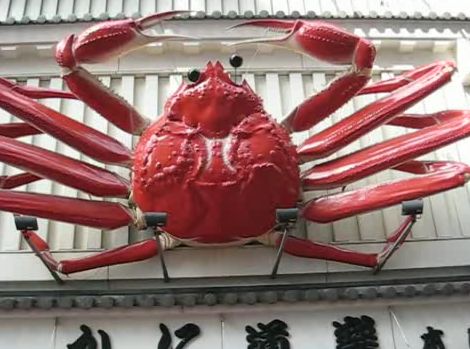
This is the latest in my series about Japanese signboards. Until now we’ve looked at giant moving crabs and manga cafés… Fun things.

But some signboards are about really serious things. (Though they still make me laugh!) Have a look at this one. I found it on a station platform.


The larger letters down the right say Chikan ni Chui, which means

“WATCH OUT FOR PERVERTS!”

The word in red is chikan, which means a guy who gropes at women in trains. It has been a social problem since long time ago in Japan.

These guys cause a lot of problems on trains and create misery for women traveling to work. The fact that the trains are packed makes it easier for the chikan and harder to know which guy did it…How to watch them out then !?

Therefore, we have trains with “Ladies Only” carriages during rush hours (女性専用車両 -> http://learnjapanese123.com/blog/?p=145 as a way of beating the problem.

The rest of the message reads Fushinsha wo mitara 110-ban – “Dial 110 (police) if you see anyone suspicious”.

We girls have got to stand up to chikan. It’s dirty and insulting. Chikan ni chuui!

–Kazue

Dec 24, 2010

Japanese Signboards

Minasan konnichiwa!


Japanese signboards are fascinating and attract a lot of photographers from overseas. The best ones are huge, three-dimensional signs that look more like characters in a manga.

This is probably the most famous one of all. It’s a sign for a restaurant called Kani Dōraku in Dōtonbori, Osaka. Can you guess what the restaurant sells…?


…YES! It’s a crab restaurant! The sign is six meters across, and would you believe, the legs on the crab actually move! It was built in 1960 and is still moving!!

I’m fascinated by Japanese signboards as well. When they’re cute, I just have to stop and kiss them.


Want to know who I’m kissing here?


The answer is “kaaru ojisan”
(Ojisan means, middle aged man)

Kawaii ne?
Cute, isn’t it?

Actually, I was not kissing him, I was trying to get the snack from him...

Jaa mata ne!

P.S. The answer of the last post is "koin landorii": coin laundry (=laundromat).
:)

–Kazue

Dec 21, 2010

Dekoboko friends

Minasan konnichiwa!

Kyoo no bideo wa 凸凹(deko boko) friends desu!

Totemo kawaii desu! zehi mite kudasai.
It's very cute, please watch it!


It has been broadcasting on NHK kyooiku
*Kyooiku means education
(Nippon Hoosoo Kyoku -Japan broadcasting corporation
-a government-run broadcasting) since 2002.

It's an animation for kids though, fun to watch for adults too :)


They always start with knocking door twice "knock knock",
in Japanese "トントン-ton ton".

(Btw, Japanese always knock twice when knock a door.)

Then, each  funny character appears and introduce oneself.

みなさんは どのキャラクターが すきですか?
Which character do you like?

I like "kuishinbon" -greedy hog.
He says, "mata kuru yo" -I'll come again- when he leaves.

.

.

Mata kuru yo.
Jaa ne!

-Kazue

Dec 11, 2010

moshi moshi

Minasan konnichiwa!
Kazue desu.

Have you heard this phrase “moshi moshi”

Moshi moshi is like “Hello”, used in a telephone conversation.

“moshi moshi, ano.. terebi asahi desu ka?”  -excuse me, (eh..) Is this Asahi TV?   - "Ano… " is a hesitation.

However, in an office, you’re supposed to say “Hai, --(co. name) no ( your name) desu.”.

“Moshi moshi"  is too casual in a business situation.

During casual conversation, we sometimes say “moshi moshi” for the meaning of  “are you listening me?” ironically.

Also, “moshi moshi” has a meaning of “Hello, excuse me” when you talk to a stranger.

Let's learn practical Japanese!

Dewa mata!

Kazue

Dec 10, 2010

chotto...

Minasan Konnichiwa!

Ogenki desu ka?

Kyoo wa totemo suzushii desu!

It’s very cooling here now.

Today, I’d like to talk about a phrase “chotto”

If you learnt Japanese before, you might heard a phrase “chotto...”

So what is chotto means?

Its literal meaning is “a little” but chotto can be used in different way too.

1. To get attention:

e.g. chotto!  Excuse me!, Lesten! (very informal, used when angry)

*sumimasen and chotto are commonly used together.

e.g. sumimasen, chotto iidesu ka?  -Excuse me, attention please!.

2. Hesitation

e.g. chotto sumimasen.  Sorry to disturb you..

3. Little

e.g. miruku o chotto irete kudasai.  Please add a little milk.

e.g. sumimasen, ima chotto iidesu ka?  Excuse me, do you have a minute now?

4. Very (negative)

e.g. Uu-n chotto muzukashii desu ne.  hmmm.. it sounds a bit difficult.

(Actually it could be “very difficult” and they often say “chotto muzukashii” with very difficult facial expression.

5. No.

e.g. A: eega o mimasen ka?  Would you like to watch movie?

B: Sumimasen, chotto…  Sorry, no.

To avoid saying exact meaning, there are varieties of expressions in Japanese.

Such as gurai(about), goro(about, around), hodo(about), tabun(maybe), etc. In addition, they like to say in a roundabout sort of way, like “Probably it seems that they say ..” if it’s literally translated into English.

They use vague expressions often because they don’t want to lose the other party’s face, as well as they try to avoid unnecessary argument especially when they have to say something negative.

Is it confusing? or interesting? It’s a culture.

You can learn such subtle cultural and linguistic differences in my Conversational Video Course!

Ja, mata ne.

-Kazue

Dec 7, 2010

doozo oagari kudasai

どうぞお上がりください。: doozo oagari kudasai.
literal translation is "please go up".

What is that mean?

It's "Please come in"

(This phrase is for your guests at home, not  at office.)

Why is that?
Because of...

the structure of genkan (entrance space) of a house. This genkan space is for taking off your shoes.
As you see, inside of the house is one step higher than the area connected to outside.

This genkan space is very useful for changing shoes to slippers (you can sit and change if necessary.)  Also, you can keep the house clean). In case of rain, you can open or close your umbrella inside the house so that you won't get wet.

After taking off your shoes, you have to turn your shoes back so that you can put it on smoothly when you go out (as well as it looks better).

You can learn this kind of Japanese culture in my conversational Japanese Course.  http://learnjapanese123.com/conversation

Dewa mata!
-Kazue

Nov 17, 2010

Konnichiwa! ~Conv. L1~

Konnichiwa, minasan. (Hello, everyone!)
Kyoo no lesson wa “aisatsu“-greeting desu.
Today’s lesson is greeting.
Ja, hajime mashoo! (let’s get started!)
  1. - Ohayoo gozaimasu.    Good morning.
  2. - Konnichiwa.   Good afternoon.
  3. - Konbanwa.    Good evening.
  4. - Jaa mata! See you again!
Jaa mata, minasan!
-Kazue
Let's Learn Japanese! -> 
http://learnjapanese123.com