Showing posts with label beginner's Japanese. Show all posts
Showing posts with label beginner's Japanese. Show all posts
Mar 29, 2012
iPhoneで日本語を学ぼう! Learn Japanese with iPhone
日本語学習アプリのプロモーションビデオを作りました。宜しくお


Mar 17, 2012
How to say "back out at the last minutes" in Japanese?
Minasan kon-nichiwa!
Ohisashi buri desu. (It’s been a while.)
Sumimasen!
Sumimasen!
ところで、(tokorode, By the way)
Do you know how to say “back out at the last minute” in Japanese?
We say it..
ドタキャンする (dota-kyan suru)
ドタキャンする (dota-kyan suru)
For the usage,
- ドタキャンしちゃった。 dota-kyan shichatta. (I shouldn’t but) I cancelled it at the last minute.
- 彼にデートをドタキャンされた。 Kare ni deeto o dota-kyan sareta. – He backed out our date at the last minute.
- 急な用事がはいったので、友達との約束をドタキャンしてしまった。 Kyuu na yooji ga haitta node, tomodachi tono yakusoku o dotakyan shite shimatta.
Because I got an urgent matter, I had to cancelled an appointment with my friend.
Because I got an urgent matter, I had to cancelled an appointment with my friend.

Please try not to do “dota-kyan” as much as possible otherwise your boy/girl will すねる (suneru) sulk..
Mata ne!
-Kazue
http://learnjapanese123.com/conversation
--Let's learn Japanese conversation!
--Let's learn Japanese conversation!
Mar 8, 2012
 昨日食べた、やよい軒のサービスランチ。
kinoo tabeta, yayoi-ken no saabisu ranchi.
Service lunch I had yesterday at Yayoi-ken.
Service lunch I had yesterday at Yayoi-ken.
このカツ丼、なんと、たったの290yen! 安い。
kono katsu-don, nanto, tatta no nihyaku kyuujuu en. Yasui!
This pork cutlet rice bowl was just 290 yen, wow!
kono katsu-don, nanto, tatta no nihyaku kyuujuu en. Yasui!
This pork cutlet rice bowl was just 290 yen, wow!
ごちそうさまでした。おいしかった。
Gochisoo sama deshita. oishikatta.
Gochisoo-sama deshita. (Thanks for the meal (Japanese say this phrase after the meal. means, “thanks for the food”). It was delicious.
Gochisoo sama deshita. oishikatta.
Gochisoo-sama deshita. (Thanks for the meal (Japanese say this phrase after the meal. means, “thanks for the food”). It was delicious.
Let's learn Japanese so that you can order food at Japanese restaurant!
Do you know how to order at Japanese restaurant? How to respond to the waitress?
Do you know how to order at Japanese restaurant? How to respond to the waitress?

Traveler's Japanese: http://learnjapanese123.com/iPhone1
You can learn not only traveler's Japanese, but also basic Japanese, grammar, Hiragana, Katakana and Kanji!

Also here is an ideal course to learn Japanese conversation!
Very easy to follow and interesting!
Very easy to follow and interesting!
Jan 16, 2011
Kawaii, Kiree, Utsukushii ?
Minasan konnichiwa!
I received a question from a reader.
Q: What are the differences between: Kawaii, Kiree and Utsukushii ?
All are positive adjectives to show compliment for someone’s appearance especially for women and objects.
Kawaii means cute, and can be used for both toddlers (girl or boy) and good-looking young adults.

Nowadays, kawaii is also used to describe a guy with a baby face. Like you see below:

You can call him “ikemen” –abbreviation for Iketeru men. -Iketeru is a slang and means, cool. So Iketeru + men = Ikemen.
(good/cool looking guy) So, this photo, Koike Teppei is known as "Kawaii Ikemen".
(As a matter of fact, I like this type of guys :p)
On the other hand, Kiree is normally meant to depict a woman’s beauty.
However, nowadays there are some Kiree na otoko (beautiful guy) like Gackt.
So he is a "kiree na Ikemen" -beautiful looking guy.

By the way, Kiree can also be used for describing things or cleanliness.
Lastly, Utsukushii has a matured, decent and gorgeous image, like you see in this image:
“berusaiyu no bara” -it's a well-know comic story for girls in Japan.
Oh well, Gackt can be Utsukushii as well.

If you have any question about usage of Japanese language, please ask me :) I'd like to share with everyone in this blog.
I received a question from a reader.
Q: What are the differences between: Kawaii, Kiree and Utsukushii ?
All are positive adjectives to show compliment for someone’s appearance especially for women and objects.
Kawaii means cute, and can be used for both toddlers (girl or boy) and good-looking young adults.

Nowadays, kawaii is also used to describe a guy with a baby face. Like you see below:
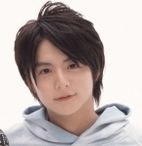
You can call him “ikemen” –abbreviation for Iketeru men. -Iketeru is a slang and means, cool. So Iketeru + men = Ikemen.
(good/cool looking guy) So, this photo, Koike Teppei is known as "Kawaii Ikemen".
(As a matter of fact, I like this type of guys :p)
On the other hand, Kiree is normally meant to depict a woman’s beauty.
However, nowadays there are some Kiree na otoko (beautiful guy) like Gackt.
So he is a "kiree na Ikemen" -beautiful looking guy.

By the way, Kiree can also be used for describing things or cleanliness.
Lastly, Utsukushii has a matured, decent and gorgeous image, like you see in this image:
“berusaiyu no bara” -it's a well-know comic story for girls in Japan.
Oh well, Gackt can be Utsukushii as well.
If you have any question about usage of Japanese language, please ask me :) I'd like to share with everyone in this blog.
Jan 15, 2011
Chikan ni Chuui! -Japanese Signboards(3)
Mina-san, konnichiwa!
This is the latest in my series about Japanese signboards. Until now we’ve looked at giant moving crabs and manga cafés… Fun things.
But some signboards are about really serious things. (Though they still make me laugh!) Have a look at this one. I found it on a station platform.

The larger letters down the right say Chikan ni Chui, which means
“WATCH OUT FOR PERVERTS!””
The word in red is chikan, which means a guy who gropes at women in trains. It has been a social problem since long time ago in Japan.
These guys cause a lot of problems on trains and create misery for women traveling to work. The fact that the trains are packed makes it easier for the chikan and harder to know which guy did it…How to watch them out then !?
Therefore, we have trains with “Ladies Only” carriages during rush hours (女性専用車両 -> http://learnjapanese123.com/blog/?p=145 as a way of beating the problem.
The rest of the message reads Fushinsha wo mitara 110-ban – “Dial 110 (police) if you see anyone suspicious”.
We girls have got to stand up to chikan. It’s dirty and insulting. Chikan ni chuui!
–Kazue
This is the latest in my series about Japanese signboards. Until now we’ve looked at giant moving crabs and manga cafés… Fun things.
But some signboards are about really serious things. (Though they still make me laugh!) Have a look at this one. I found it on a station platform.

The larger letters down the right say Chikan ni Chui, which means
“WATCH OUT FOR PERVERTS!””
The word in red is chikan, which means a guy who gropes at women in trains. It has been a social problem since long time ago in Japan.
These guys cause a lot of problems on trains and create misery for women traveling to work. The fact that the trains are packed makes it easier for the chikan and harder to know which guy did it…How to watch them out then !?
Therefore, we have trains with “Ladies Only” carriages during rush hours (女性専用車両 -> http://learnjapanese123.com/blog/?p=145 as a way of beating the problem.
The rest of the message reads Fushinsha wo mitara 110-ban – “Dial 110 (police) if you see anyone suspicious”.
We girls have got to stand up to chikan. It’s dirty and insulting. Chikan ni chuui!
–Kazue
Jan 14, 2011
Japanese Language Tips: 3 Common Mistakes amongst Foreigners
Minasan konnichiwa!
As a Japanese teacher myself, I find some common mistakes amongst learners of Japanese due to the culture difference behind the language. So today, I'd like to discuss 3 common mistakes.
Sayoonara :“I won’t see you again!” -– said by a souvenir shop keeper
You probably learnt “goodbye” as Sayoonara in Japanese. Yes, that’s how we (Japanese people) learnt it at school and that’s why your Japanese teacher taught you this way.
However, in the real world (outside school), we rarely use “sayoonara” amongst ourselves. Even when we do, it is used with different meanings in different contexts. Sayoonara is used in farewell or breaking up situations. Especially in the latter case, it means “goodbye forever”. Therefore, if you’re a shop clerk, don’t say “sayoonara” to your customers, but “arigatoo gozaimashita” (Thank you very much). Otherwise, you might end up in losing your regulars!
Watashi no nihongo wa warui desu :“My Japanese is vicious” – said by a student
A common tendency is to simply translate our native language. In this case, the student probably wanted to say “My Japanese is bad”. Yes, warui means bad, but in a moralistic way. Therefore, in the situation “He has a fault” or “She is wrong”, we can say “kare/kanojo ga warui desu”. However, your Japanese cannot be moralistically bad! If you want to say “My Japanese is bad/not good”, you need to say it another way, like “I’m not good at Japanese”. So in Japanese, say “Watashi wa nihongo ga heta desu”. (I hope you won’t have to say that though!)
Anata mo genki desu ka? :“Hey stranger, are you fine too?” – said by a close friend
Even some Japanese teachers teach “you” as “anata”. However, the usage of “anata” is different from that of “you” in English. We hardly ever call our friends “anata”, except jokingly. We use the person’s name. (For example, Kazue mo genki? Or Tanaka-san mo 0-genki desu ka?) Japanese love to be called by name; we feel a bit sad when we’re called “anata”, because we each have our unique name.
Hope it's all clear. :) but don't worry making mistakes! By making mistakes, I can notice and correct them.
I made a lot of mistakes in English too :P (and still... maybe forever!?)
I'll update once I find some more. Jaa mata ne!
As a Japanese teacher myself, I find some common mistakes amongst learners of Japanese due to the culture difference behind the language. So today, I'd like to discuss 3 common mistakes.
Sayoonara :“I won’t see you again!” -– said by a souvenir shop keeper
You probably learnt “goodbye” as Sayoonara in Japanese. Yes, that’s how we (Japanese people) learnt it at school and that’s why your Japanese teacher taught you this way.
However, in the real world (outside school), we rarely use “sayoonara” amongst ourselves. Even when we do, it is used with different meanings in different contexts. Sayoonara is used in farewell or breaking up situations. Especially in the latter case, it means “goodbye forever”. Therefore, if you’re a shop clerk, don’t say “sayoonara” to your customers, but “arigatoo gozaimashita” (Thank you very much). Otherwise, you might end up in losing your regulars!
Watashi no nihongo wa warui desu :“My Japanese is vicious” – said by a student
A common tendency is to simply translate our native language. In this case, the student probably wanted to say “My Japanese is bad”. Yes, warui means bad, but in a moralistic way. Therefore, in the situation “He has a fault” or “She is wrong”, we can say “kare/kanojo ga warui desu”. However, your Japanese cannot be moralistically bad! If you want to say “My Japanese is bad/not good”, you need to say it another way, like “I’m not good at Japanese”. So in Japanese, say “Watashi wa nihongo ga heta desu”. (I hope you won’t have to say that though!)
Anata mo genki desu ka? :“Hey stranger, are you fine too?” – said by a close friend
Even some Japanese teachers teach “you” as “anata”. However, the usage of “anata” is different from that of “you” in English. We hardly ever call our friends “anata”, except jokingly. We use the person’s name. (For example, Kazue mo genki? Or Tanaka-san mo 0-genki desu ka?) Japanese love to be called by name; we feel a bit sad when we’re called “anata”, because we each have our unique name.
Hope it's all clear. :) but don't worry making mistakes! By making mistakes, I can notice and correct them.
I made a lot of mistakes in English too :P (and still... maybe forever!?)
I'll update once I find some more. Jaa mata ne!
Jan 13, 2011
七夕: The Story of Tanabata
7月7日、今日は七夕です。kyoo wa tanabata desu!
July 7th is the day of the Tanabata Festival.
I remember that I had lots of fun in Tanabata festivals in elementary school. We wrote our wishes on strips of paper called tanzaku, which we tied to bamboo branches.
Actually, Tanabata is based on a Chinese legend about a princess and a cowherd who fell in love. They are symbolized by the stars Altair and Vega that only cross paths once a year – on July 7th!
Some people say Tanabata is a mixture of ancient Japanese and Chinese legends. ‘Tanabata’ means ‘cloth of the loom’ and has nothing to do with the letters 七夕 (Qi Xi in Chinese, Chilseok in Korean), which mean ‘Night of the Sevens’.
We even have a Tanabata song in Japan:)
Sasanoha sarasara
Nokiba ni yureru
Ohoshisama kirakira
Kin gin sunago
Bamboo leaves rustle
Quivering at the eaves
Stars glitter
Gold and silver sands
Goshiki no tanzakuWatashi ga kaita
Ohoshisama kirakira
Sora kara miteru
Strips of paper with five colors
I wrote them
Stars glitter
Look down from the above
Let's look up the sky and enjoy the Tanabata night! :)
Jan 11, 2011
Japanese Language Tips: “ごろ:goro”
Minasan Konnichiwa!
This week’s ‘Japanese language tip’ is about goro – meaning “about”!
Have you noticed Japanese people being deliberately vague? They think it’s more polite to express themselves vaguely rather than clearly and directly. Here’s a good example when talking about the time.
A: Nan-ji goro ikimasu ka?
B: Hachi-ji goro ikimasu.
---
A: What time will you go?
B: At 8 o’clock.
Hachi-ji goro actually means “About eight o’clock”, but don’t be deceived! People use goro even when they mean the exact time. And if you’ve been invited to a friend’s house at hachi-ji goro – don’t be late! In Japan, you’re usually expected to turn up on time.
–Of course, that doesn’t apply to boys meeting their girlfriends for a date…boys cannot be late and should arrive even earlier (my opinion, hahaha).
And please note if it’s a business meeting, you’re expected to turn up five to ten minutes early!!
So ki o tsukete! (be careful!)
Mata ne!
–Kazue
This week’s ‘Japanese language tip’ is about goro – meaning “about”!
Have you noticed Japanese people being deliberately vague? They think it’s more polite to express themselves vaguely rather than clearly and directly. Here’s a good example when talking about the time.
A: Nan-ji goro ikimasu ka?
B: Hachi-ji goro ikimasu.
---
A: What time will you go?
B: At 8 o’clock.
Hachi-ji goro actually means “About eight o’clock”, but don’t be deceived! People use goro even when they mean the exact time. And if you’ve been invited to a friend’s house at hachi-ji goro – don’t be late! In Japan, you’re usually expected to turn up on time.
–Of course, that doesn’t apply to boys meeting their girlfriends for a date…boys cannot be late and should arrive even earlier (my opinion, hahaha).
And please note if it’s a business meeting, you’re expected to turn up five to ten minutes early!!
So ki o tsukete! (be careful!)
Mata ne!
–Kazue
Jan 10, 2011
なっとう Nattō
Minasan konnichiwa!
I’m going to talk about Japanese food today.
Not all that stuff everyone loves – tempura, sushi, raamen, gyōza, (yum!) – but the food foreigners (and some Japanese) just can’t get used to!
Let’s start with this:
Nattō - one of my favorite Japanese food :)

Oh no! Some people are already turning away in disgust! But wait – nattō is really delicious when you get used to it! Really – hontō da yo!
Nattō is just fermented soybeans. The fermenting process creates this sticky slime that holds the whole thing together and gets everywhere! Just the sight of that puts most foreigners off!
But once you’ve tried it a few times (and got used to the smell – oh, I forgot to mention that!) you might just get hooked.
Best way of eating? Just try it on a bowl of rice, as in the picture. Wave your chopsticks about to catch the strands of slime, and you’ll soon be saying Gochisō-sama! (Thanks for the meal!) Or even O-kawari arimasu ka? (Can I have some more?)
More strange Japanese foods coming soon.
Jaa mata ne!
–Kazue
I’m going to talk about Japanese food today.
Not all that stuff everyone loves – tempura, sushi, raamen, gyōza, (yum!) – but the food foreigners (and some Japanese) just can’t get used to!
Let’s start with this:
Nattō - one of my favorite Japanese food :)
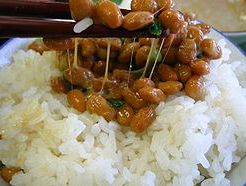
Oh no! Some people are already turning away in disgust! But wait – nattō is really delicious when you get used to it! Really – hontō da yo!
Nattō is just fermented soybeans. The fermenting process creates this sticky slime that holds the whole thing together and gets everywhere! Just the sight of that puts most foreigners off!
But once you’ve tried it a few times (and got used to the smell – oh, I forgot to mention that!) you might just get hooked.
Best way of eating? Just try it on a bowl of rice, as in the picture. Wave your chopsticks about to catch the strands of slime, and you’ll soon be saying Gochisō-sama! (Thanks for the meal!) Or even O-kawari arimasu ka? (Can I have some more?)
More strange Japanese foods coming soon.
Jaa mata ne!
–Kazue
Dec 26, 2010
Are you herbivorous or carnivorous? ~Trendy Japanese~
Minasan konnichiwa!
I want to tell you about ‘trendy Japanese’. That doesn’t mean fashions or music! I’m talking about language.
We Japanese love making up new words or phrases that are trendy for a while, but quickly go out of fashion. They’re usually quite funny too.
Here are some to start with.
草食系男子
Sōshoku-kei danshi – men who are not aggressive towards career, love or sex. Tend to be modern, neat and posh guys
肉食系男子
Nikushoku-kei danshi – who are opposite to "Sōshoku-kei danshi"; some people may say it's a traditional Japanese men..(!?)
Actually, sōshoku-kei danshi literally means “herbivorous male”! And yes, nikushoku-kei danshi means “carnivorous male”. But it’s nothing to do with their eating habits. It’s more their attitude to life.
“Herbivorous men” are more attractive to girls in Japan today. It’s because they’re less demanding; the modern Japanese woman wants to be free to live her life as she pleases.
And now, there’s a new word for these women too:
肉食女子
Nikushoku joshi – carnivorous females! Run for cover, guys!
Nowadays, Japanese women are much more proactive in their love lives as well as their careers. They seem to be inspired by media images like the four women in “Sex and the City”.
And there’s another type of “carnivorous female”:
Here are related articles in Japanese.
http://www.j-cast.com/2009/01/02032952.html
http://opi-rina.chunichi.co.jp/topic/20100519-1.html
Seems like it’s lonely being a meat-eater in Japan!
Ah, Yakiniku tabetai! (I wanna eat Yakiniku!)
More trendy words coming soon.
Jaa ne!
–Kazue
I want to tell you about ‘trendy Japanese’. That doesn’t mean fashions or music! I’m talking about language.
We Japanese love making up new words or phrases that are trendy for a while, but quickly go out of fashion. They’re usually quite funny too.
Here are some to start with.
草食系男子
Sōshoku-kei danshi – men who are not aggressive towards career, love or sex. Tend to be modern, neat and posh guys
肉食系男子
Nikushoku-kei danshi – who are opposite to "Sōshoku-kei danshi"; some people may say it's a traditional Japanese men..(!?)
Actually, sōshoku-kei danshi literally means “herbivorous male”! And yes, nikushoku-kei danshi means “carnivorous male”. But it’s nothing to do with their eating habits. It’s more their attitude to life.
“Herbivorous men” are more attractive to girls in Japan today. It’s because they’re less demanding; the modern Japanese woman wants to be free to live her life as she pleases.
And now, there’s a new word for these women too:
肉食女子
Nikushoku joshi – carnivorous females! Run for cover, guys!
Nowadays, Japanese women are much more proactive in their love lives as well as their careers. They seem to be inspired by media images like the four women in “Sex and the City”.
And there’s another type of “carnivorous female”:
ホルモン女子
Horumon joshi – “yakiniku girl” (horumon (=hormone/ organ meat) is another word for yakiniku)

Here are related articles in Japanese.
http://www.j-cast.com/2009/01/02032952.html
http://opi-rina.chunichi.co.jp/topic/20100519-1.html
Seems like it’s lonely being a meat-eater in Japan!
Ah, Yakiniku tabetai! (I wanna eat Yakiniku!)
More trendy words coming soon.
Jaa ne!
–Kazue
Dec 25, 2010
Minasan konnichiwa!
I just love old Japanese proverbs. Some of them are so funny! So I’m going to introduce the best ones here.
Here’s one of my favorites:
サルも木から落ちる

Monkeys aren’t supposed to fall out of trees. They’re supposed to know what they’re doing! But you know – even monkeys fall out of trees?
Got it? It’s what people say when someone has made a mistake they’re not expected to make.
In English, people say “Well… No one’s perfect” Or “We all make mistakes.” But I prefer that mental image of a monkey falling out of a tree. What would the other monkeys say to make it feel better?
Here’s another one that means almost the same thing:
弘法にも筆の誤り
Kōbō nimo fude no ayamari
“Even (the famous calligrapher) Kobo (Taishi) made mistakes with the brush”
It’s not so funny, is it?
If you look these up in a dictionary, you might find this one in English:
“Even Homer sometimes nods”
But I don’t think you would ever say this – would you??
I’d rather think of that monkey falling out of its tree.
More funny Japanese proverbs coming soon!
Jaa mata ne
–Kazue
I just love old Japanese proverbs. Some of them are so funny! So I’m going to introduce the best ones here.
Here’s one of my favorites:
サルも木から落ちる
Saru-mo ki-kara ochiru
“Even monkeys fall out of trees!”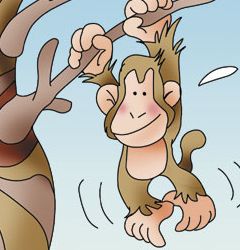
Monkeys aren’t supposed to fall out of trees. They’re supposed to know what they’re doing! But you know – even monkeys fall out of trees?
Got it? It’s what people say when someone has made a mistake they’re not expected to make.
In English, people say “Well… No one’s perfect” Or “We all make mistakes.” But I prefer that mental image of a monkey falling out of a tree. What would the other monkeys say to make it feel better?
Here’s another one that means almost the same thing:
弘法にも筆の誤り
Kōbō nimo fude no ayamari
“Even (the famous calligrapher) Kobo (Taishi) made mistakes with the brush”
It’s not so funny, is it?
If you look these up in a dictionary, you might find this one in English:
“Even Homer sometimes nods”
But I don’t think you would ever say this – would you??
I’d rather think of that monkey falling out of its tree.
More funny Japanese proverbs coming soon!
Jaa mata ne
–Kazue
Dec 24, 2010
Japanese Signboards
Minasan konnichiwa!
Japanese signboards are fascinating and attract a lot of photographers from overseas. The best ones are huge, three-dimensional signs that look more like characters in a manga.
This is probably the most famous one of all. It’s a sign for a restaurant called Kani Dōraku in Dōtonbori, Osaka. Can you guess what the restaurant sells…?

…YES! It’s a crab restaurant! The sign is six meters across, and would you believe, the legs on the crab actually move! It was built in 1960 and is still moving!!
I’m fascinated by Japanese signboards as well. When they’re cute, I just have to stop and kiss them.

Want to know who I’m kissing here?
The answer is “kaaru ojisan”
(Ojisan means, middle aged man)
Kawaii ne?
Cute, isn’t it?
Actually, I was not kissing him, I was trying to get the snack from him...
Jaa mata ne!
P.S. The answer of the last post is "koin landorii": coin laundry (=laundromat).
:)
–Kazue
Japanese signboards are fascinating and attract a lot of photographers from overseas. The best ones are huge, three-dimensional signs that look more like characters in a manga.
This is probably the most famous one of all. It’s a sign for a restaurant called Kani Dōraku in Dōtonbori, Osaka. Can you guess what the restaurant sells…?
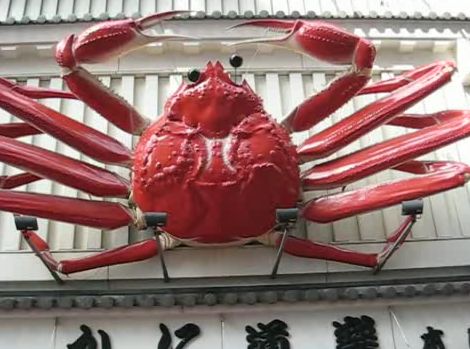
…YES! It’s a crab restaurant! The sign is six meters across, and would you believe, the legs on the crab actually move! It was built in 1960 and is still moving!!
I’m fascinated by Japanese signboards as well. When they’re cute, I just have to stop and kiss them.

Want to know who I’m kissing here?
The answer is “kaaru ojisan”
(Ojisan means, middle aged man)
Kawaii ne?
Cute, isn’t it?
Actually, I was not kissing him, I was trying to get the snack from him...
Jaa mata ne!
P.S. The answer of the last post is "koin landorii": coin laundry (=laundromat).
:)
–Kazue
Dec 23, 2010
Scenery in my hometown
Minasan konnichiwa!
Ogenki desu ka?
Watashi wa ima nihon no jikka ni imasu.
Now I'm in Japan, in my home town (Saitama).
The weather here is perfect past three days, nice, crisp, no clouds.
Totemo ii tenki de, kimochi ga iidesu.
It's been very nice weather and feel good.
Atsu sugizu, samu sugizu.
Not too hot or too cold.
Kono shashin wa uchi no kinjo desu.
This photo is taken in my neighborhood.

Tanbo - rice paddy.
My home town is a residential area and about 1hrs away from Tokyo by train.
Totemo shizuka desu. Very quiet.
Kyoo wa chotto kinjo o sanpo shimashita.
I took a walk in my neighborhood.
I just saw this signboard along the way.
Can you guess what shop is this?

Hehehe, if you cannot guess, please learn Japanese Katakana!
http://learnjapanese123.com/HiraganaKatakana
You can download pdf sample textbook and practice Japanese from the above link too.
Kotae wa tsugi no blog post de!
I'll show you the answer in the next blog post :)
Mata ne!
Kazue
Ogenki desu ka?
Watashi wa ima nihon no jikka ni imasu.
Now I'm in Japan, in my home town (Saitama).
The weather here is perfect past three days, nice, crisp, no clouds.
Totemo ii tenki de, kimochi ga iidesu.
It's been very nice weather and feel good.
Atsu sugizu, samu sugizu.
Not too hot or too cold.
Kono shashin wa uchi no kinjo desu.
This photo is taken in my neighborhood.
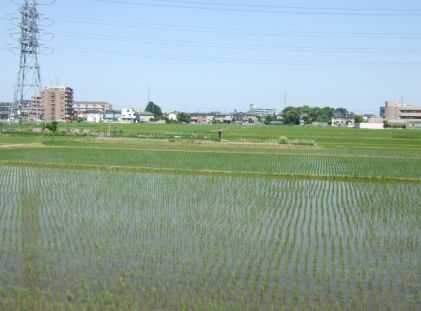
Tanbo - rice paddy.
My home town is a residential area and about 1hrs away from Tokyo by train.
Totemo shizuka desu. Very quiet.
Kyoo wa chotto kinjo o sanpo shimashita.
I took a walk in my neighborhood.
I just saw this signboard along the way.
Can you guess what shop is this?

Hehehe, if you cannot guess, please learn Japanese Katakana!
http://learnjapanese123.com/HiraganaKatakana
You can download pdf sample textbook and practice Japanese from the above link too.
Kotae wa tsugi no blog post de!
I'll show you the answer in the next blog post :)
Mata ne!
Kazue
Dec 22, 2010
Japanese Language Tips: “ね:ne”
Minasan konnichiwa!
Have you heard Japanese people saying “ne?” at the end of a sentence – even when they’re speaking English?
Here are some examples:
––This is your tax form, ne?
––You understand, ne?
Crazy! But what’s it for?
You’ll see from this conversation:
A: Sumimasen, B-san no denwa bangō wa nan-ban desu ka?
B: 738-2910 desu.
A: 738-2910 desu ne?
B: Hai, sō desu.
---
A: Excuse me, B, what’s your telephone number?
B: It’s 738-2910.
A: 738-2910?
B: Yes, that’s right.
So here, “ne” is used to confirm that you heard something correctly, especially when you’re certain you’ve got it right.
“Ne” is also used to express a shared feeling or emotion, or to seek a person’s agreement.
A: Ii tenki desu ne.
B: Sō desu ne.
---
A: It’s nice weather, isn’t it?
B: Yes, it is. (indeed).
“ne” is quite close to English “isn’t it”, or “yes?”, or “OK?” at the end of a sentence.
Actually, if you listen carefully, you’ll even hear me saying it on my Japanese video course! http://learnjapanese123.com/conversation You'll find a sample video there.
In fact, you’ll hear it everywhere you go in Japan. One little word to express all those things – Benri desu ne! (Convenient, isn’t it!)
Dewa, mata ne! (See you again – OK!)
–Kazue
Have you heard Japanese people saying “ne?” at the end of a sentence – even when they’re speaking English?
Here are some examples:
––This is your tax form, ne?
––You understand, ne?
Crazy! But what’s it for?
You’ll see from this conversation:
A: Sumimasen, B-san no denwa bangō wa nan-ban desu ka?
B: 738-2910 desu.
A: 738-2910 desu ne?
B: Hai, sō desu.
---
A: Excuse me, B, what’s your telephone number?
B: It’s 738-2910.
A: 738-2910?
B: Yes, that’s right.
So here, “ne” is used to confirm that you heard something correctly, especially when you’re certain you’ve got it right.
“Ne” is also used to express a shared feeling or emotion, or to seek a person’s agreement.
A: Ii tenki desu ne.
B: Sō desu ne.
---
A: It’s nice weather, isn’t it?
B: Yes, it is. (indeed).
“ne” is quite close to English “isn’t it”, or “yes?”, or “OK?” at the end of a sentence.
Actually, if you listen carefully, you’ll even hear me saying it on my Japanese video course! http://learnjapanese123.com/conversation You'll find a sample video there.
In fact, you’ll hear it everywhere you go in Japan. One little word to express all those things – Benri desu ne! (Convenient, isn’t it!)
Dewa, mata ne! (See you again – OK!)
–Kazue
Dec 21, 2010
Dekoboko friends
Minasan konnichiwa!
Kyoo no bideo wa 凸凹(deko boko) friends desu!
Totemo kawaii desu! zehi mite kudasai.
It's very cute, please watch it!
It has been broadcasting on NHK kyooiku
*Kyooiku means education
(Nippon Hoosoo Kyoku -Japan broadcasting corporation
-a government-run broadcasting) since 2002.
It's an animation for kids though, fun to watch for adults too :)
They always start with knocking door twice "knock knock",
in Japanese "トントン-ton ton".
(Btw, Japanese always knock twice when knock a door.)
Then, each funny character appears and introduce oneself.
みなさんは どのキャラクターが すきですか?
Which character do you like?
I like "kuishinbon" -greedy hog.
He says, "mata kuru yo" -I'll come again- when he leaves.
.
.
Mata kuru yo.
Jaa ne!
-Kazue
Kyoo no bideo wa 凸凹(deko boko) friends desu!
Totemo kawaii desu! zehi mite kudasai.
It's very cute, please watch it!
It has been broadcasting on NHK kyooiku
*Kyooiku means education
(Nippon Hoosoo Kyoku -Japan broadcasting corporation
-a government-run broadcasting) since 2002.
It's an animation for kids though, fun to watch for adults too :)
They always start with knocking door twice "knock knock",
in Japanese "トントン-ton ton".
(Btw, Japanese always knock twice when knock a door.)
Then, each funny character appears and introduce oneself.
みなさんは どのキャラクターが すきですか?
Which character do you like?
I like "kuishinbon" -greedy hog.
He says, "mata kuru yo" -I'll come again- when he leaves.
.
.
Mata kuru yo.
Jaa ne!
-Kazue
Dec 20, 2010
If you cannot see -> にほんご
Minasan konnichiwa.
Hi, I'm just wondering if you see Japanese letters, such as
この日本語見える?
If you cannot view Japanese above, you need to change the setting of your browser. Please follow the instruction below:
Internet Explorer:
1. Right click then choose "Encoding"
2. Select "Japanese (Auto Select)"
For Firefox or Netscape
1. Go to "View" on the top and select "Character Encoding",
2. Choose "Japanese" or
Choose "Auto-Detect", and then "Japanese"
Hope you can see Japanese letters and learn something from this blog :)
Ja mata ne!
-Kazue
Hi, I'm just wondering if you see Japanese letters, such as
この日本語見える?
If you cannot view Japanese above, you need to change the setting of your browser. Please follow the instruction below:
Internet Explorer:
1. Right click then choose "Encoding"
2. Select "Japanese (Auto Select)"
For Firefox or Netscape
1. Go to "View" on the top and select "Character Encoding",
2. Choose "Japanese" or
Choose "Auto-Detect", and then "Japanese"
Hope you can see Japanese letters and learn something from this blog :)
Ja mata ne!
-Kazue
Dec 11, 2010
moshi moshi
Minasan konnichiwa!
Kazue desu.
Have you heard this phrase “moshi moshi”
Moshi moshi is like “Hello”, used in a telephone conversation.
“moshi moshi, ano.. terebi asahi desu ka?” -excuse me, (eh..) Is this Asahi TV? - "Ano… " is a hesitation.
However, in an office, you’re supposed to say “Hai, --(co. name) no ( your name) desu.”.
“Moshi moshi" is too casual in a business situation.
During casual conversation, we sometimes say “moshi moshi” for the meaning of “are you listening me?” ironically.
Also, “moshi moshi” has a meaning of “Hello, excuse me” when you talk to a stranger.
Let's learn practical Japanese!
Dewa mata!
Kazue
Kazue desu.
Have you heard this phrase “moshi moshi”
Moshi moshi is like “Hello”, used in a telephone conversation.
“moshi moshi, ano.. terebi asahi desu ka?” -excuse me, (eh..) Is this Asahi TV? - "Ano… " is a hesitation.
However, in an office, you’re supposed to say “Hai, --(co. name) no ( your name) desu.”.
“Moshi moshi" is too casual in a business situation.
During casual conversation, we sometimes say “moshi moshi” for the meaning of “are you listening me?” ironically.
Also, “moshi moshi” has a meaning of “Hello, excuse me” when you talk to a stranger.
Let's learn practical Japanese!
Dewa mata!
Kazue
Dec 10, 2010
chotto...
Minasan Konnichiwa!
Ogenki desu ka?
Kyoo wa totemo suzushii desu!
It’s very cooling here now.
Today, I’d like to talk about a phrase “chotto”
If you learnt Japanese before, you might heard a phrase “chotto...”
So what is chotto means?
Its literal meaning is “a little” but chotto can be used in different way too.
1. To get attention:
e.g. chotto! Excuse me!, Lesten! (very informal, used when angry)
*sumimasen and chotto are commonly used together.
e.g. sumimasen, chotto iidesu ka? -Excuse me, attention please!.
2. Hesitation
e.g. chotto sumimasen. Sorry to disturb you..
3. Little
e.g. miruku o chotto irete kudasai. Please add a little milk.
e.g. sumimasen, ima chotto iidesu ka? Excuse me, do you have a minute now?
4. Very (negative)
e.g. Uu-n chotto muzukashii desu ne. hmmm.. it sounds a bit difficult.
(Actually it could be “very difficult” and they often say “chotto muzukashii” with very difficult facial expression.
5. No.
e.g. A: eega o mimasen ka? Would you like to watch movie?
B: Sumimasen, chotto… Sorry, no.
To avoid saying exact meaning, there are varieties of expressions in Japanese.
Such as gurai(about), goro(about, around), hodo(about), tabun(maybe), etc. In addition, they like to say in a roundabout sort of way, like “Probably it seems that they say ..” if it’s literally translated into English.
They use vague expressions often because they don’t want to lose the other party’s face, as well as they try to avoid unnecessary argument especially when they have to say something negative.
Is it confusing? or interesting? It’s a culture.
You can learn such subtle cultural and linguistic differences in my Conversational Video Course!
Ja, mata ne.
-Kazue
Ogenki desu ka?
Kyoo wa totemo suzushii desu!
It’s very cooling here now.
Today, I’d like to talk about a phrase “chotto”
If you learnt Japanese before, you might heard a phrase “chotto...”
So what is chotto means?
Its literal meaning is “a little” but chotto can be used in different way too.
1. To get attention:
e.g. chotto! Excuse me!, Lesten! (very informal, used when angry)
*sumimasen and chotto are commonly used together.
e.g. sumimasen, chotto iidesu ka? -Excuse me, attention please!.
2. Hesitation
e.g. chotto sumimasen. Sorry to disturb you..
3. Little
e.g. miruku o chotto irete kudasai. Please add a little milk.
e.g. sumimasen, ima chotto iidesu ka? Excuse me, do you have a minute now?
4. Very (negative)
e.g. Uu-n chotto muzukashii desu ne. hmmm.. it sounds a bit difficult.
(Actually it could be “very difficult” and they often say “chotto muzukashii” with very difficult facial expression.
5. No.
e.g. A: eega o mimasen ka? Would you like to watch movie?
B: Sumimasen, chotto… Sorry, no.
To avoid saying exact meaning, there are varieties of expressions in Japanese.
Such as gurai(about), goro(about, around), hodo(about), tabun(maybe), etc. In addition, they like to say in a roundabout sort of way, like “Probably it seems that they say ..” if it’s literally translated into English.
They use vague expressions often because they don’t want to lose the other party’s face, as well as they try to avoid unnecessary argument especially when they have to say something negative.
Is it confusing? or interesting? It’s a culture.
You can learn such subtle cultural and linguistic differences in my Conversational Video Course!
Ja, mata ne.
-Kazue
Dec 9, 2010
Let's learn ひらがな(Hiragana) & カタカナ(Katakana)!
みなさん、こんにちは!
Minasan konnichiwa!
Do you know what is Hiragana (ひらがな) and Katakana (かたかな)?
Both are the original Japanese letters for reading and writing.
Japanese learn these letters in their primary schools.
If you walk in Japanese streets, you'll see these letters everywhere.
And it's vital to learn these Hiragana and Katakana when you visit Japan because most of the sign boards are written in Japanese!
Today I would like to inform you my new product:
Complete Hiragana & Katakana Workbooks with Video Tutorials
If you are keen to learn Japanese reading and writing, Please click the above link!
You might say, "Why do I have to buy it from you?"
The reason is, the free websites Hiragana lessons you see on internet have a lot of mistakes and none of them are not complete or effective.
I don't want you to waster your precious time.
That's why I spent 100s of hours to create this material.
If you learn from this Complete Hiragana & Katakana Workbooks with step-by-step Video tutorials, you'll get a clear idea and will begin to read and write Japanese with confidence in a week.
Here is a demo video:

I hope you like it.
Let's take a short cut in learning ひらがな Hiragana and カタカナ Katakana!
Learn more detail on:
http://learnjapanese123.com/HiraganaKatakana
- かずえ
Minasan konnichiwa!
Do you know what is Hiragana (ひらがな) and Katakana (かたかな)?
Both are the original Japanese letters for reading and writing.
Japanese learn these letters in their primary schools.
If you walk in Japanese streets, you'll see these letters everywhere.
And it's vital to learn these Hiragana and Katakana when you visit Japan because most of the sign boards are written in Japanese!
Today I would like to inform you my new product:
Complete Hiragana & Katakana Workbooks with Video Tutorials
If you are keen to learn Japanese reading and writing, Please click the above link!
You might say, "Why do I have to buy it from you?"
The reason is, the free websites Hiragana lessons you see on internet have a lot of mistakes and none of them are not complete or effective.
I don't want you to waster your precious time.
That's why I spent 100s of hours to create this material.
If you learn from this Complete Hiragana & Katakana Workbooks with step-by-step Video tutorials, you'll get a clear idea and will begin to read and write Japanese with confidence in a week.
Here is a demo video:
I hope you like it.
Let's take a short cut in learning ひらがな Hiragana and カタカナ Katakana!
Learn more detail on:
http://learnjapanese123.com/HiraganaKatakana
- かずえ
Dec 8, 2010
elevator girl

Why don’t Japanese look me in the eyes?
In Japanese society, looking at someone directly is sometimes considered as showing strong hostility, especially towards to your seniors (However, it matters what you want to communicate e.g. a questioning look, a puzzled look, a disagreeing look. Sometimes we need to look directly at somebody to convey these). This can be traced back to the strict class system during Edo period (1600-1867)
For a job interview, we are advised to look around the tie area of the interviewer. Of course, we should look at the interviewer’s eyes sometimes, but not for too long.
Have you noticed that elevator girl? (a girl who presses the floor buttons for you at high-class department stores, such as Mitsukoshi) They normally wear a wide-brimmed hat so that they can avoid direct eye contact with customers.
Anyhow Japanese are generally shy and not used to looking at the opponents’ eyes directly for long time. So please don’t worry even if they seem not to be looking at you. They are still listening to you!
Subscribe to:
Comments (Atom)