Dec 26, 2010

Are you herbivorous or carnivorous? ~Trendy Japanese~

Minasan konnichiwa!

I want to tell you about ‘trendy Japanese’. That doesn’t mean fashions or music! I’m talking about language.

We Japanese love making up new words or phrases that are trendy for a while, but quickly go out of fashion. They’re usually quite funny too.

Here are some to start with.

草食系男子
Sōshoku-kei danshi – men who are not aggressive towards career, love or sex. Tend to be modern, neat and posh guys

肉食系男子
Nikushoku-kei danshi – who are opposite to "Sōshoku-kei danshi"; some people may say it's a traditional Japanese men..(!?)

Actually, sōshoku-kei danshi literally means “herbivorous male”! And yes, nikushoku-kei danshi means “carnivorous male”. But it’s nothing to do with their eating habits. It’s more their attitude to life.

“Herbivorous men” are more attractive to girls in Japan today. It’s because they’re less demanding; the modern Japanese woman wants to be free to live her life as she pleases.

And now, there’s a new word for these women too:

肉食女子
Nikushoku joshi – carnivorous females! Run for cover, guys!

Nowadays, Japanese women are much more proactive in their love lives as well as their careers. They seem to be inspired by media images like the four women in “Sex and the City”.

And there’s another type of “carnivorous female”:

ホルモン女子
Horumon joshi – “yakiniku girl” (horumon (=hormone/ organ meat) is another word for yakiniku)

These are women who love eating at yakiniku (barbecued beef) restaurants and don’t mind eating alone there. These used to be places for middle aged salary-men or company employees. But now, to meet increasing demand from “carnivorous females”, some yakiniku (barbecued beef) restaurants have rearranged their interiors so that single customers (“o-hitori-sama”), particularly female ones, can eat there alone.

Here are related articles in Japanese.
http://www.j-cast.com/2009/01/02032952.html
http://opi-rina.chunichi.co.jp/topic/20100519-1.html

Seems like it’s lonely being a meat-eater in Japan!
Ah, Yakiniku tabetai!  (I wanna eat Yakiniku!)

More trendy words coming soon.

Jaa ne!

–Kazue

Dec 25, 2010

Minasan konnichiwa!

I just love old Japanese proverbs. Some of them are so funny! So I’m going to introduce the best ones here.

Here’s one of my favorites:

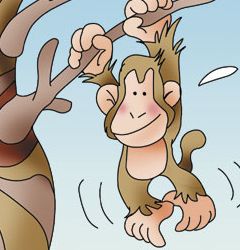
サルも木から落ちる

Saru-mo ki-kara ochiru

“Even monkeys fall out of trees!”


Monkeys aren’t supposed to fall out of trees. They’re supposed to know what they’re doing! But you know – even monkeys fall out of trees?

Got it? It’s what people say when someone has made a mistake they’re not expected to make.

In English, people say “Well… No one’s perfect” Or “We all make mistakes.” But I prefer that mental image of a monkey falling out of a tree. What would the other monkeys say to make it feel better?

Here’s another one that means almost the same thing:

弘法にも筆の誤り

Kōbō nimo fude no ayamari


“Even (the famous calligrapher) Kobo (Taishi) made mistakes with the brush”

It’s not so funny, is it?

If you look these up in a dictionary, you might find this one in English:

“Even Homer sometimes nods”

But I don’t think you would ever say this – would you??

I’d rather think of that monkey falling out of its tree.


More funny Japanese proverbs coming soon!

Jaa mata ne

–Kazue

Dec 24, 2010

Japanese Signboards

Minasan konnichiwa!


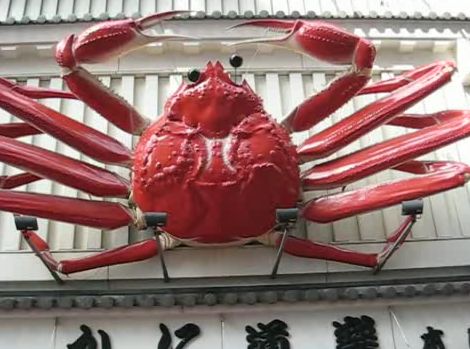
Japanese signboards are fascinating and attract a lot of photographers from overseas. The best ones are huge, three-dimensional signs that look more like characters in a manga.

This is probably the most famous one of all. It’s a sign for a restaurant called Kani Dōraku in Dōtonbori, Osaka. Can you guess what the restaurant sells…?


…YES! It’s a crab restaurant! The sign is six meters across, and would you believe, the legs on the crab actually move! It was built in 1960 and is still moving!!

I’m fascinated by Japanese signboards as well. When they’re cute, I just have to stop and kiss them.


Want to know who I’m kissing here?


The answer is “kaaru ojisan”
(Ojisan means, middle aged man)

Kawaii ne?
Cute, isn’t it?

Actually, I was not kissing him, I was trying to get the snack from him...

Jaa mata ne!

P.S. The answer of the last post is "koin landorii": coin laundry (=laundromat).
:)

–Kazue

Dec 23, 2010

Scenery in my hometown

Minasan konnichiwa!

Ogenki desu ka?
Watashi wa ima nihon no jikka ni imasu.
Now I'm in Japan, in my home town (Saitama).

The weather here is perfect past three days, nice, crisp, no clouds.
Totemo ii tenki de, kimochi ga iidesu.
It's been very nice weather and feel good.

Atsu sugizu, samu sugizu.
Not too hot or too cold.

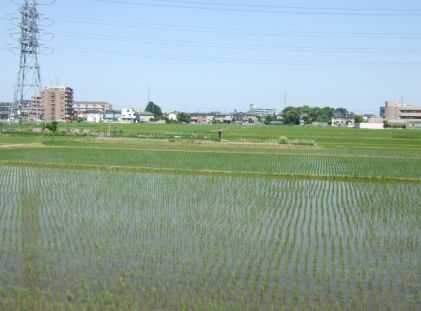
Kono shashin wa uchi no kinjo desu.
This photo is taken in my neighborhood.


Tanbo - rice paddy.

My home town is a residential area and about 1hrs away from Tokyo by train.

Totemo shizuka desu. Very quiet.

Kyoo wa chotto kinjo o sanpo shimashita.

I took a walk in my neighborhood.

I just saw this signboard along the way.

Can you guess what shop is this?


Hehehe, if you cannot guess, please  learn Japanese Katakana!

http://learnjapanese123.com/HiraganaKatakana

You can download pdf sample textbook and practice Japanese from the above link too.

Kotae wa tsugi no blog post de!
I'll show you the answer in the next blog post :)

Mata ne!

Kazue

Dec 22, 2010

Japanese Language Tips: “ね:ne”

Minasan konnichiwa!


Have you heard Japanese people saying “ne?” at the end of a sentence – even when they’re speaking English?

Here are some examples:

––This is your tax form, ne?

––You understand, ne?


Crazy! But what’s it for?

You’ll see from this conversation:

A: Sumimasen, B-san no denwa bangō wa nan-ban desu ka?

B: 738-2910 desu.

A: 738-2910 desu ne?

B: Hai, sō desu.

---

A: Excuse me, B, what’s your telephone number?

B: It’s 738-2910.

A: 738-2910?

B: Yes, that’s right.

So here, “ne” is used to confirm that you heard something correctly, especially when you’re certain you’ve got it right.

Ne” is also used to express a shared feeling or emotion, or to seek a person’s agreement.

A: Ii tenki desu ne.

B: Sō desu ne.

---

A: It’s nice weather, isn’t it?

B: Yes, it is. (indeed).

ne” is quite close to English “isn’t it”, or “yes?”, or “OK?” at the end of a sentence.

Actually, if you listen carefully, you’ll even hear me saying it on my Japanese video course!   http://learnjapanese123.com/conversation You'll find a sample video there.

In fact, you’ll hear it everywhere you go in Japan. One little word to express all those things – Benri desu ne! (Convenient, isn’t it!)

Dewa, mata ne! (See you again – OK!)

–Kazue

Dec 21, 2010

Dekoboko friends

Minasan konnichiwa!

Kyoo no bideo wa 凸凹(deko boko) friends desu!

Totemo kawaii desu! zehi mite kudasai.
It's very cute, please watch it!


It has been broadcasting on NHK kyooiku
*Kyooiku means education
(Nippon Hoosoo Kyoku -Japan broadcasting corporation
-a government-run broadcasting) since 2002.

It's an animation for kids though, fun to watch for adults too :)


They always start with knocking door twice "knock knock",
in Japanese "トントン-ton ton".

(Btw, Japanese always knock twice when knock a door.)

Then, each  funny character appears and introduce oneself.

みなさんは どのキャラクターが すきですか?
Which character do you like?

I like "kuishinbon" -greedy hog.
He says, "mata kuru yo" -I'll come again- when he leaves.

.

.

Mata kuru yo.
Jaa ne!

-Kazue

Dec 20, 2010

If you cannot see -> にほんご

Minasan konnichiwa.

Hi, I'm just wondering if you see Japanese letters, such as
この日本語見える?

If you cannot view Japanese above, you need to change the setting of your browser. Please follow the instruction below:

Internet Explorer:
1. Right click then choose "Encoding"
2. Select "Japanese (Auto Select)"

For Firefox or Netscape
1. Go to "View" on the top and select "Character Encoding",
2. Choose "Japanese" or
Choose "Auto-Detect", and then "Japanese"

Hope you can see Japanese letters and learn something from this blog :)

Ja mata ne!
-Kazue